10-Minute Morning Moves Checklist for Better Focus
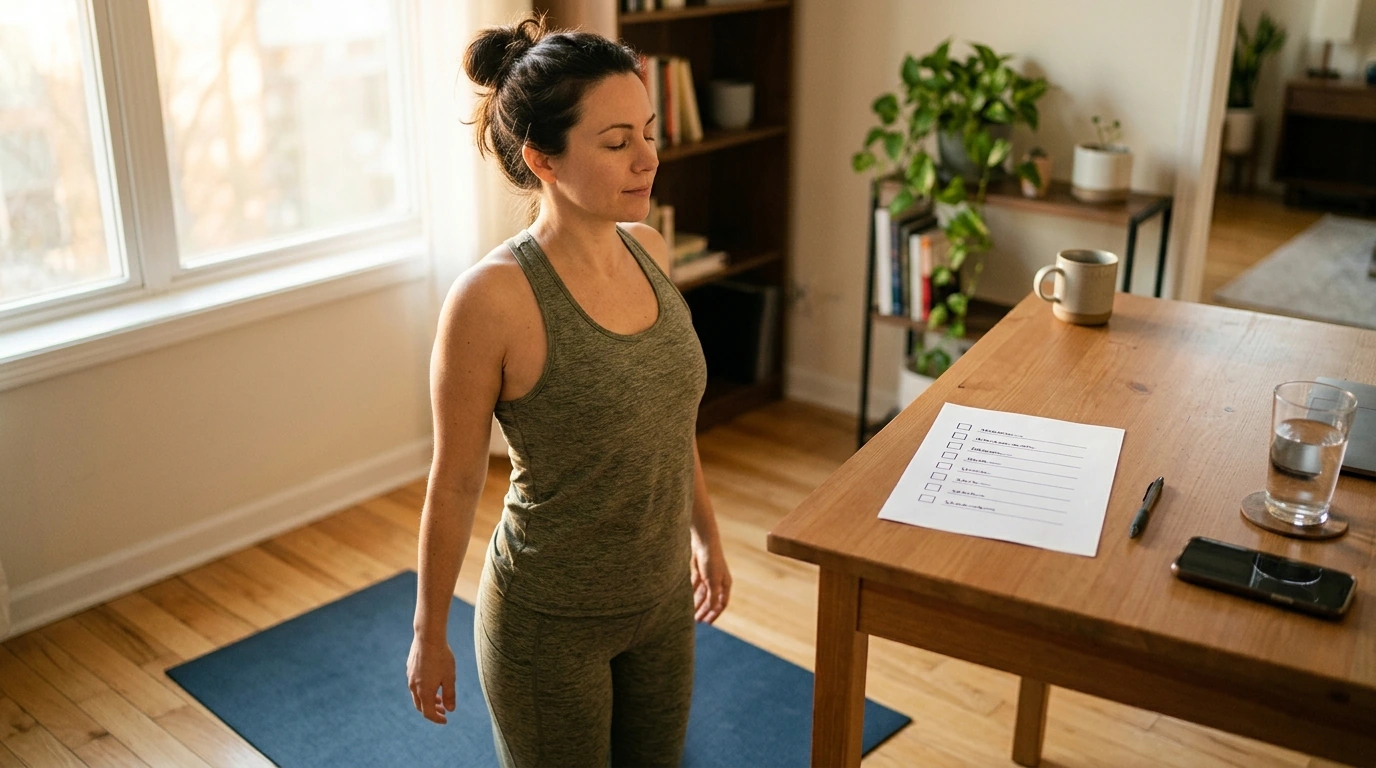
Morning Moves Checklist: A 10-Minute Routine to Jumpstart Focus
A simple, repeatable morning sequence can shift the body out of “sleep mode” and into steady focus—without requiring a full workout. The idea is to move just enough to wake up your joints and muscles, then add a short mental reset so your first real task feels obvious instead of overwhelming. A printable checklist makes the whole process feel automatic: quick movement, a few grounding steps, and a clear finish line you can check off before the day gets noisy.
What the Morning Moves Checklist Is (and Why It Works)
The Morning Moves Checklist is a structured 10-minute sequence that blends light mobility, gentle activation, and a brief focus cue. It’s built for consistency, not intensity—because the biggest payoff comes from showing up daily, even when energy is low.
Checklists are especially helpful on busy mornings because they reduce decision fatigue. Instead of negotiating with yourself (“What should I do first?”), you follow the next step. That small shift can make starting feel easier, which matters when stress is already high. If you’re navigating ongoing stress, it can also help to learn what’s happening in the body and mind; the American Psychological Association’s overview of stress is a useful reference point.
This approach fits naturally into early mornings, work-from-home transitions, study sessions, and pre-commute routines. It also pairs well with general movement recommendations like the American College of Sports Medicine physical activity guidelines—but the purpose here is a fast “switch-on,” not a full training session.
The 10-Minute Morning Moves Routine (Pick, Set a Timer, Start)
Set a timer for 10 minutes, choose your options, and begin. Keep it easy enough that you can do it on a tight morning without bargaining or overthinking.
- Minute 1: Hydrate + posture reset (stand tall, shoulders relaxed, slow inhale/exhale).
- Minutes 2–3: Neck/shoulder mobility (gentle circles, shoulder rolls, reach and open the chest).
- Minutes 4–5: Spine and hips (cat-cow or standing roll-down, hip circles, easy hinge).
- Minutes 6–7: Activation (glute squeezes, wall push-ups, bodyweight good-mornings, or marching in place).
- Minutes 8–9: Light cardio burst (step-ups, brisk walk around the room, or low-impact jumping jacks).
- Minute 10: Focus cue (write one priority, silence nonessential notifications, set a start task).
10-Minute Checklist Options (Mix and Match)
| Minute | Movement | Low-impact option | Focus cue |
|---|---|---|---|
| 1 | Hydrate + tall stance | Seated posture reset | Name today’s main goal |
| 2 | Shoulder rolls + reach | Wall-supported reach | Slow exhale to downshift stress |
| 3 | Neck/upper back mobility | Gentle side bends | Pick a start time for deep work |
| 4 | Cat-cow or roll-down | Standing only, small range | Clear one small workspace item |
| 5 | Hip circles + hinge | Hands on hips, micro-circles | Choose a “done” definition for task 1 |
| 6 | Glute activation | Isometric squeezes seated | Open only the apps/tools needed |
| 7 | Wall push-ups | Incline push on counter | One sentence: why it matters today |
| 8 | March or step-ups | Slow march holding chair | Start playlist/timer for work block |
| 9 | Brisk walk/low jacks | Side steps | Put phone in another room if possible |
| 10 | Breathing + plan | Box breathing 4-4-4-4 | Write the first tiny action |
Make It Stick: The Checklist Method (No Extra Motivation Required)
The easiest routine is the one you can repeat without relying on willpower. A checklist turns a “someday habit” into something concrete you can complete in a few minutes—even if the night was short. If sleep has been inconsistent, building a gentle morning ramp can feel especially supportive; the CDC’s sleep resources offer helpful context on why rest matters.
- Place it where it happens: nightstand, bathroom mirror, fridge, or desk.
- Use one trigger: after brushing teeth, when the coffee starts, or right after waking.
- Keep the same order for 2 weeks: variety comes after consistency.
- Track one metric: “Did it happen today?” (intensity is optional).
- Use a minimum version when mornings are chaotic: hydrate, 2 minutes mobility, 1 minute focus cue.
Quick Routines for Different Mornings
Different days need different dial settings. The checklist works best when it flexes without breaking.
- Low-energy day: slower mobility, longer exhales, and a short walk to wake up gently.
- High-stress day: extend the breathing/focus minute and reduce the cardio burst.
- Sore or stiff day: choose smaller ranges of motion and prioritize hips and upper back.
- Short on time: do minutes 1–3 and 10, plus one activation move (5 minutes total).
- Quiet household: use silent movements (marching, wall push-ups) instead of jumping.
Printable Digital Download: What’s Included and How to Use It
The printable format is designed for daily check-offs and routine repetition. It works as a wellness planner insert, especially when paired with a weekly schedule or habit tracker.
If you want a ready-to-go version, the Morning Moves Checklist printable digital download is built for quick routines and daily check-offs.
For those who like pairing movement with a calmer mindset, the AI meditation tracker guide for building a daily mindfulness practice can complement the checklist by adding a simple, trackable reflection habit.
Common Mistakes That Make Morning Routines Harder
FAQ
Is a 10-minute routine enough to improve focus?
Yes—short movement plus a brief plan or breathing cue can increase alertness and cut decision fatigue. The real advantage comes from repeating it often, not making it longer.
Do these morning moves require equipment or a workout space?
No. Most options are bodyweight and work in a small area, with chair- or wall-supported variations if you want lower impact.
How do the printable checklists help with motivation?
A preset sequence reduces the effort it takes to start, and checking off steps creates visible progress. That quick “win” reinforces the habit loop and makes tomorrow’s start easier.















Leave a comment