Pranayama Checklist Routine for Calm, Focus, and Sleep
Why a checklist works better than guessing
Breathwork is simple in the body but easy to overcomplicate in practice. A checklist turns pranayama into a repeatable rhythm you can rely on when you’re busy, stressed, or low on willpower.
- It reduces decision fatigue by turning the session into a short sequence: prepare, practice, recover, reflect.
- It keeps effort sustainable, so breathing stays smooth and quiet rather than strained.
- It builds consistency—often more important than intensity for steadier attention and nervous-system balance.
- It makes patterns easier to spot (time of day, energy level, triggers) so you can adjust without overthinking.
Breath control is widely recognized as a practical relaxation approach; for a clear medical overview, see Harvard Health Publishing’s note on how breath control can help calm the stress response: Relaxation techniques: Breath control helps quell errant stress response.
Set the foundation in 60 seconds
Before you count anything, set up the conditions that make breathing feel safe and effortless. This one-minute setup often determines whether the practice feels grounding or frustrating.
- Posture: sit tall or lie down with the chest open; soften the jaw and let the shoulders drop.
- Environment: reduce distractions; soften lighting; silence notifications.
- Breathing quality check: inhale and exhale through the nose if comfortable; keep the breath quiet and unforced.
- Baseline: take 5 natural breaths and note what’s present—tight chest, shallow breath, racing thoughts, low energy.
If nasal breathing feels restricted, don’t force it. Keep the breath gentle, and prioritize comfort over “doing it correctly.”
Choose a practice based on today’s goal
Different patterns support different outcomes. Matching the method to the moment keeps your practice useful instead of random.
- For calm: emphasize longer exhales and gentle pacing; avoid aggressive breath holds.
- For focus: use steady, even breathing with a simple count and minimal complexity.
- For energy: choose brightening techniques carefully; keep intensity moderate and stop if dizzy or anxious.
- For sleep: prioritize downshifting practices and end with a quiet rest phase.
Goal-to-practice quick pick
| Goal | Practice options | Simple starting dose | When to avoid or modify |
|---|---|---|---|
| Calm | Extended exhale breathing; Bhramari (humming breath) | 3–5 minutes; light effort | Skip breath retentions if anxious or lightheaded |
| Focus | Box breathing (gentle); counted equal breathing | 4 minutes at an easy count | Reduce count if it feels tense or forced |
| Energy | Kapalabhati (only if experienced); breath pacing with slightly stronger inhales | 30–60 seconds x 2 rounds, rest between | Avoid if pregnant, hypertensive, or prone to panic; stop if dizzy |
| Sleep | 4-6 breathing; body scan with slow nasal breathing | 5–8 minutes | Don’t chase deep breaths—keep it soft and quiet |
For a simple, widely used focus-and-calm pattern, Cleveland Clinic offers an accessible overview of box breathing and how it may support stress regulation: Box Breathing.
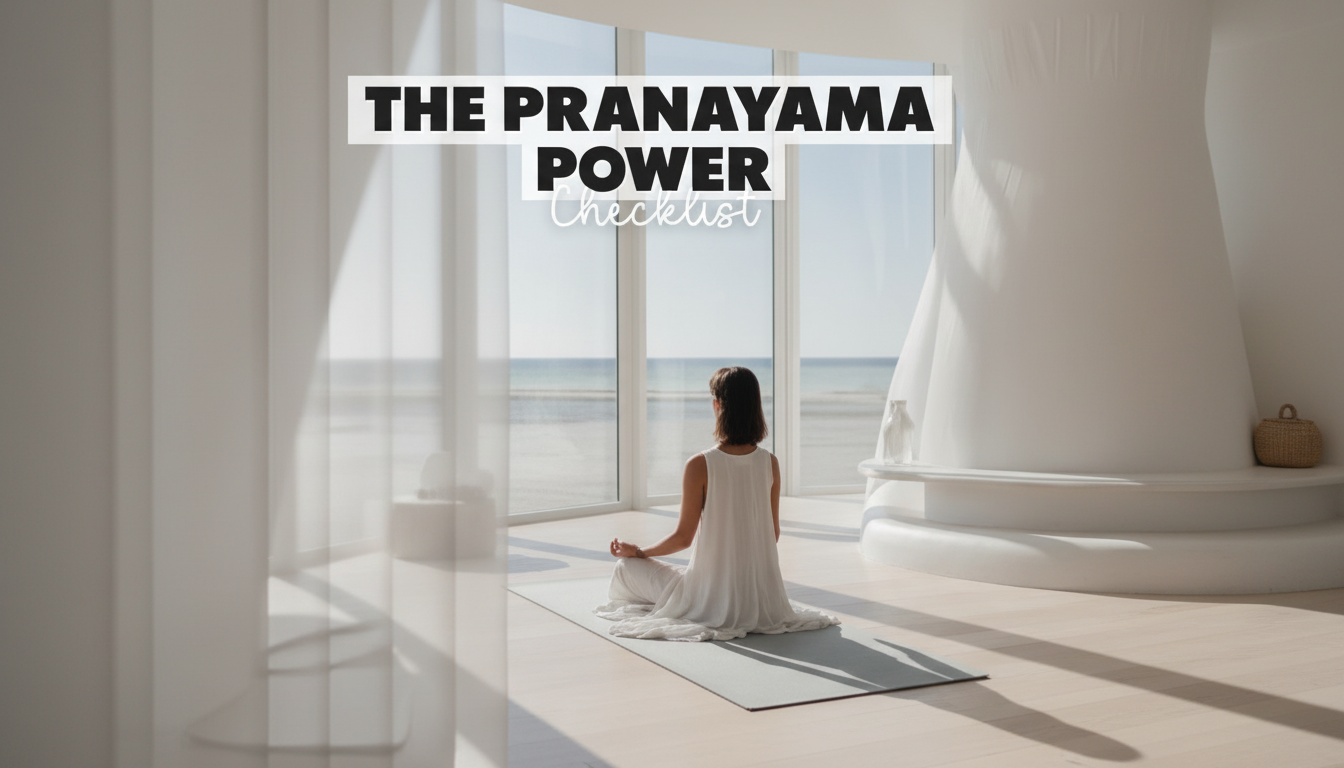
The Pranayama Power Checklist: a repeatable sequence
This is the “do it anywhere” flow—short, structured, and designed to keep you below strain. Use it at your desk, before a meeting, after a tense message, or as a pre-sleep downshift.
- Step 1 — Arrive: take 5 natural breaths; unclench the shoulders; let the tongue relax away from the palate.
- Step 2 — Choose: pick one technique and one time target: 2, 4, or 6 minutes.
- Step 3 — Practice: stay below strain; if the breath gets jagged, shorten the count or pause.
- Step 4 — Recover: 30–60 seconds of normal breathing to let the body settle.
- Step 5 — Integrate: notice the after-effect (clearer head, softer chest, steadier attention) and carry it into the next task.
- Optional tracking: record time, technique, and a one-word outcome (calm, steady, wired, sleepy) to learn what works.
If you want a ready-made format you can follow without thinking, The Pranayama Power Checklist | Digital Yoga Pranayama Practices Guide for Better Breathing, Focus & Calm is a straightforward digital reference that mirrors this step-by-step structure.
Safety notes and common troubleshooting
Good pranayama feels steady, not heroic. Keep the goal as “smooth and sustainable,” and you’ll get more benefit with fewer side effects.
For a research-grounded overview of yoga as a mind-body practice (including breath-centered components), the National Center for Complementary and Integrative Health is a reliable starting point: NCCIH — Yoga.
Make it stick: micro-sessions across the day
A simple way to stay consistent is to track only what matters: when you practiced, what you did, and how it felt afterward. If you like guided reflection or a structured way to notice trends, Using AI to Track and Enhance Your Daily Meditation Practice | Guide for Mindfulness Growth | Digital Download can help you turn quick notes into a clearer picture of what supports calm and focus.
Digital checklist format: practical benefits for real life
FAQ
How long should a pranayama session be to notice benefits?
Even 2–6 minutes can be effective if you do it consistently and keep the breath smooth. Start small, include a brief recovery phase, and build time only if it stays comfortable.
Is it normal to feel lightheaded during breathwork?
It can happen if breathing becomes too forceful, too fast, or if you’re overdoing breath holds. Stop, return to natural breathing, and reduce the count or intensity; if it keeps happening, consult a clinician.
Can pranayama help with focus during work or studying?
Yes—steady, gentle breathing can support attention by reducing stress activation and giving the mind a simple anchor. Try 60–90 seconds of equal breathing or gentle box breathing right before starting a task.














Leave a comment