Indoor Cat Enrichment: DIY Toys, Play & Home Setup
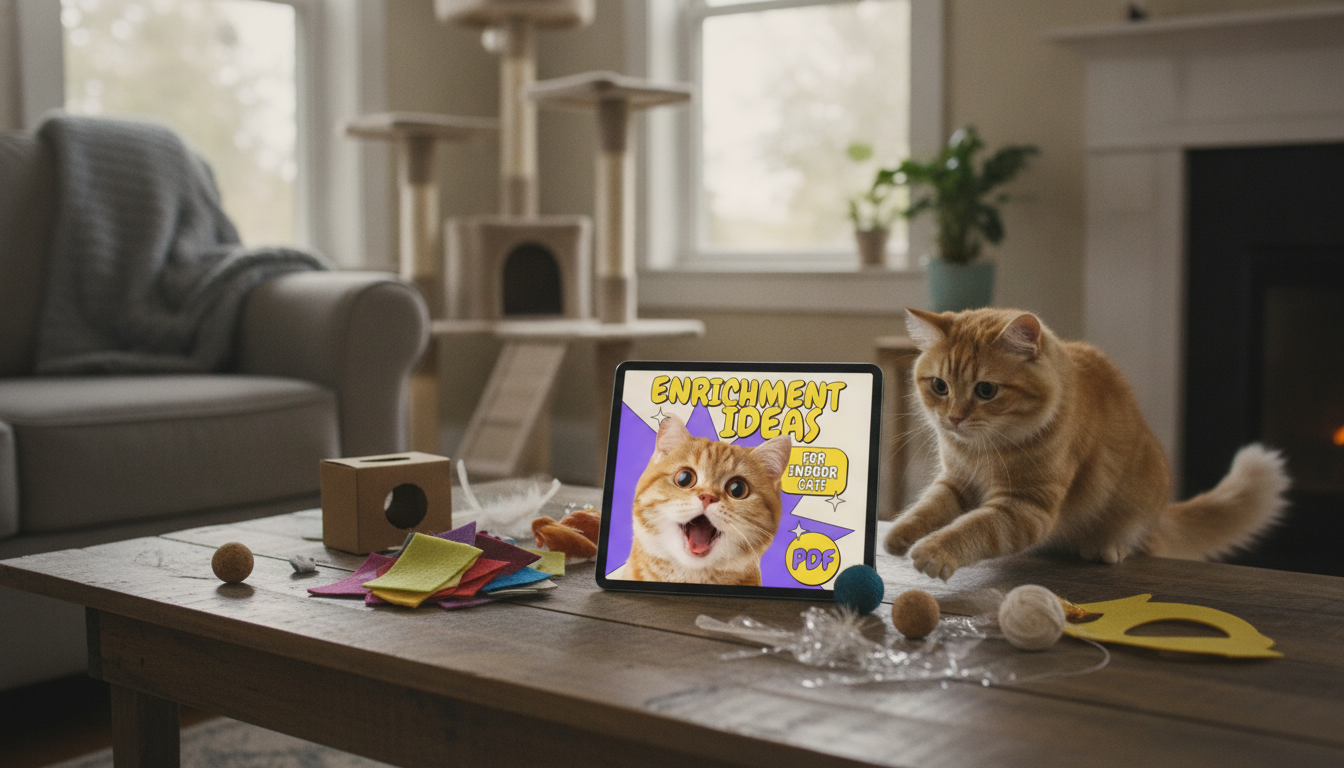
Enrichment Ideas for Indoor Cats: DIY Toys, Play Routines, and Cat-Friendly Home Tips
Indoor cats do best when their day includes hunting-style play, puzzle feeding, climbing, scratching, and quiet recovery time. A simple plan—paired with easy DIY toys and a few home tweaks—can reduce boredom, stress behaviors, and those late-night zoomies while supporting a healthy weight and a calmer mood.
Why indoor enrichment matters
Even the most pampered indoor cat still carries the same instincts: stalk, chase, climb, sniff, scratch, and solve small “problems” to earn rewards. When indoor life limits those outlets, frustration can spill into the household in ways that look like “bad behavior,” but are often unmet needs.
- Indoor life can limit stalking, climbing, scent-tracking, and problem-solving—needs that still drive cat behavior.
- Common signs of under-stimulation include waking people at night, rough play, attention-seeking vocalizing, overgrooming, and food obsession.
- Balanced enrichment combines physical activity, mental challenge, choice/agency, and predictable rest.
For deeper guidance on meeting environmental needs, see the American Association of Feline Practitioners (AAFP) Feline Environmental Needs Guidelines.
The five building blocks of a satisfying day
Think in “modules” you can mix and match. A great cat day usually includes:
- Hunt: short, intense play bursts that mimic stalk → chase → pounce → capture.
- Chew and crunch: safe edible enrichment via measured treats, kibble hunts, or vet-approved dental chews.
- Climb and perch: vertical territory using window perches, shelves, sturdy cat trees, or cleared bookcase levels.
- Scratch and mark: multiple scratch surfaces (vertical and horizontal) placed where the cat already scratches.
- Hide and observe: covered beds, tunnels, and “safe rooms” to allow retreat—especially in multi-pet homes.
| Goal | Low-effort idea | DIY option | Best time of day |
|---|---|---|---|
| Burn energy | Wand toy sprints (5–10 min) | Ribbon-on-a-stick (supervised) | Morning and early evening |
| Mental challenge | Treat scatter in a snuffle mat | Cardboard “foraging box” with paper balls | Midday |
| Reduce stress | Quiet perch + consistent routine | Blanket “cave” bed | After visitors or loud events |
| Healthy scratching | Add a scratch pad near favorite spot | Corrugated cardboard scratcher | Anytime |
| Confidence building | New object to investigate | Paper bag with handles removed | When calm/curious |
DIY toys and enrichment you can make in minutes
DIY enrichment works best when it’s quick to assemble, easy to replace, and safe if your cat gets a little too enthusiastic.
- Toilet-paper-roll treat puzzle: fold the ends, poke a few holes, add a few treats, and let your cat bat it around.
- Cardboard box “apartment”: cut 1–2 doorways, add a blanket, and rotate box positions weekly to keep novelty.
- Paper-ball soccer: crumple paper into loose balls; toss one at a time to encourage chasing and carrying.
- Foraging “leaf pile”: toss a few treats into a shallow bin filled with tissue paper or craft paper (no ribbons).
- Scent enrichment: rub a cloth on safe herbs (catnip, silvervine) and hide it under a bed edge for sniffing sessions.
- Safety rules: avoid string, yarn, rubber bands, small foam pieces, and unattended ribbon; supervise anything that can be swallowed.
For more ideas to rotate (without reinventing the wheel), keep a simple checklist or printable plan handy. The Enrichment Ideas for Indoor Cats | Printable Cat Enrichment Guide | DIY Toys, Play Routines, and Cat-Friendly Home Tips is designed to make daily variety easier to stick with.
Play routines that fit real schedules
Most cats prefer frequent “sprints” over marathon sessions. Short play blocks also make it easier to stop before excitement turns into grabbing, biting, or zooming.
Sample weekly plan (rotate to keep it interesting)
| Day | Morning (5–10 min) | Midday (2–5 min) | Evening (5–10 min) |
|---|---|---|---|
| Mon | Wand chase + pounce | Treat scavenger hunt | Kicker toy wrestling |
| Tue | Laser play + toy “catch” finish | Window perch birdwatching | Puzzle feeder dinner |
| Wed | Fetch with soft ball | Scent cloth hide-and-seek | Tunnel ambush game |
| Thu | Staircase chase (safe, supervised) | Cardboard box exploration | Wand “floor prey” slow hunt |
| Fri | Climb-to-perch lure | Food puzzle roll | Hide-and-pounce with blanket |
| Sat | New toy rotation day | Calm brushing + treat | Longer play then meal |
| Sun | Training cues (sit/touch) | Quiet nap zone reset | Gentle chase + cooldown |
Cat-friendly home tips: small changes with big impact
If you’re organizing a calmer “cat corner,” closed storage can help keep wand toys and treat puzzles out of reach between sessions. A piece like the Rustic Wood Sideboard can double as a staging area for enrichment supplies while keeping clutter down.
More enrichment guidance and household setup ideas can be found at International Cat Care and the ASPCA’s cat enrichment resources.
Food enrichment without overfeeding
Troubleshooting common challenges
Printable guide to keep routines consistent
For a ready-to-use option, see the Printable Cat Enrichment Guide with DIY toys, play routines, and home tips.
FAQ
How much play time does an indoor cat need each day?
Many adult indoor cats do well with about 10–30 minutes total per day split into 2–3 short sessions, with adjustments for age, health, and personality. Ending play with a small snack or meal often helps your cat settle.
What are safe DIY cat toys to leave out when unattended?
Low-risk options include sturdy balls, soft plush toys without loose parts, large cardboard boxes, and paper bags with handles removed. Avoid leaving out string, yarn, ribbon, rubber bands, or small pieces that can be chewed off and swallowed.
How can enrichment help with scratching furniture and nighttime zoomies?
Place scratchers right where your cat already tries to scratch, and add a consistent play-then-meal routine in the evening to burn energy and encourage calm sleep. If these behaviors appear suddenly or come with appetite or litter box changes, check in with a veterinarian.
















Leave a comment