Dior Through the Decades: Identity, Icons, and AI
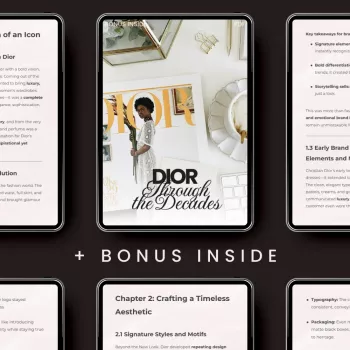
Dior Through the Decades: How a Fashion House Kept Its Identity While Reinventing It
Dior’s identity has never been static. It’s a continuous conversation between couture codes, cultural shifts, and the creative directors who reinterpret what “Dior” means for a new generation. From the shock of the 1947 New Look to today’s digital-first luxury storytelling, the house has balanced continuity (silhouette, craftsmanship, French elegance) with change (styling, casting, communication, and now AI-assisted design and content workflows). This guide maps the major eras, the leadership transitions that shaped them, and the modern transformation of luxury branding—from runway to e-commerce to algorithmic creativity—so the evolution reads as a coherent arc rather than disconnected moments. For more guidance, see Dior – Wikipedia.
What “Dior” Means: The Brand Codes That Persist
Even as the styling and cultural references shift, Dior remains recognizable because its most durable signals are structural and repeatable. The silhouette is the brand’s first language: a controlled waist, architectural line, and deliberate proportion that telegraph couture discipline. That discipline is reinforced by atelier craft—embellishment, technique, and finish that function as proof of value and as story. For further reading, see Christian Dior | History | Research Starters – EBSCO.
Then there’s iconography: cannage, Bar jacket references, serif typography, and signature accessories that repeat with variation. Dior also thrives on a productive tension between tradition and provocation—refinement punctuated by periodic disruption to stay culturally current. Finally, the house’s “world” is bigger than runway looks: perfume, beauty, handbags, and ready-to-wear all echo the same universe, building familiarity across price points and categories.
Core Dior Brand Codes and How They Show Up
| Brand code | What it signals | Where it appears |
|---|---|---|
| Bar jacket / cinched waist | Couture heritage and structure | Runway tailoring, campaigns, editorial styling |
| Cannage pattern | Maison lineage and artisanal detail | Handbags, packaging, store design |
| Floral references | Femininity and romanticism | Prints, set design, perfume storytelling |
| Architectural tailoring | Modernity through construction | Coats, suiting, sculptural dresses |
| Elevated minimal palette | Luxury restraint | Brand typography, product photography, digital layouts |
1947–1957: Christian Dior and the Shock of the New
The New Look didn’t just introduce a silhouette; it reframed postwar fashion around volume, structure, and optimism. With it, Dior established elegance as engineered design—an outcome of construction, not an accident of ease. Early identity was built on the authority of the atelier and the spectacle of couture presentation, where the “house” itself became the guarantee of taste.
Crucially, this era also set a business template: rapid expansion through perfumes and global recognition. For historical context on Christian Dior’s impact, sources like the Metropolitan Museum of Art and Encyclopaedia Britannica outline how quickly the designer reshaped the industry.
1957–1989: After the Founder—Continuity Through Multiple Hands
After Dior’s death, the challenge wasn’t merely to keep selling clothes—it was to keep a “Dior line” alive without Dior himself. Yves Saint Laurent’s early tenure brought youthfulness and modern ease while respecting the house’s disciplined foundation. Marc Bohan’s long era then delivered stability and refined wearability, making Dior feel consistent even as decades and trends rolled by.
During this period, Dior became institutional: a standard of French luxury whose identity could survive leadership changes. Category growth and international presence reinforced the idea that Dior wasn’t only runway moments; it was a durable system of taste, product, and presentation.
1989–1996: Gianfranco Ferré and the Return to Architectural Glamour
1997–2011: John Galliano and the Era of Narrative Spectacle
2012–2015: Raf Simons and Modern Minimalism with Couture Discipline
2016–Present: Maria Grazia Chiuri—Feminist Framing and Global Community
Digital Transformation: How Dior’s Identity Lives Online
Luxury e-commerce depends on detail: product imagery standards, copy tone, packaging cues, and a customer journey that feels elevated without being cold. Data can inform what resonates, but the goal is discernment, not trend-chasing. With discourse moving at platform speed, risk management becomes operational: clearer governance for campaigns and partnerships protects brand equity. For a sense of how the house communicates its universe today, reference the official Dior website.
AI in Fashion: Practical Uses and Brand-Safe Boundaries
Shop the Edit: Dior-Inspired Learning and Lifestyle Picks
- Dior Through the Decades: A Complete Guide to Dior Brand Identity Evolution, Creative Directors, Digital Transformation & AI in Fashion eBook ($16.99)
- Large Capacity Non-Woven Clothes & Quilt Storage Bag Organizer ($4.51)
- Luxury Marble Round Coffee Table with Gold Stainless Steel Base ($1411.99)
Who This Guide Is For and What It Helps With
Get the eBook: Dior Through the Decades
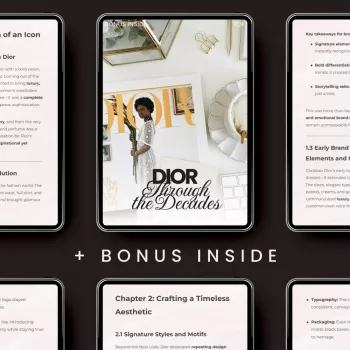
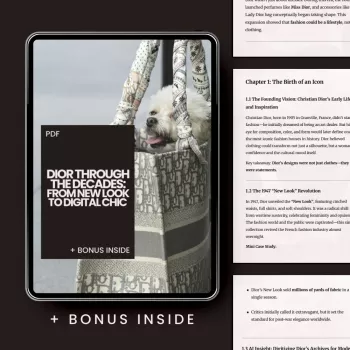
For a decade-by-decade view of Dior’s evolving identity—plus a clear lens on digital storytelling, platform dynamics, and AI’s growing role—explore the Dior Through the Decades eBook. It’s built for quick reference and deeper study, whether you’re planning a project, building a case study, or organizing notes on the house’s most influential eras.
FAQ
Who were Dior’s most influential creative directors after Christian Dior?
Yves Saint Laurent brought youthful modernity, Marc Bohan delivered long-run stability and refinement, Gianfranco Ferré reintroduced architectural glamour, John Galliano amplified narrative spectacle, Raf Simons sharpened modern minimalism, and Maria Grazia Chiuri reframed the house through message-led community and craft.
How has Dior adapted to digital media without losing its luxury identity?
Dior maintains consistent visual systems and controlled storytelling across channels, aligning runway, campaigns, and e-commerce with repeatable standards for imagery, typography, and tone. Governance and careful partnership choices help preserve brand equity at the speed of online discourse.
Where does AI fit in a heritage fashion house’s creative and marketing process?
AI can accelerate ideation, streamline content operations (like tagging and localization), and improve personalization through smarter recommendations. Strong guardrails—human review, provenance, and ethical dataset practices—are essential to protect craftsmanship, trust, and brand coherence.











Leave a comment