Save Money at Home: Budget, Bills, and Waste Cuts
Smart Savings at Home: Practical Ways to Make Every Dollar Count
Saving money at home works best when small habits are paired with a simple plan: reduce waste, lower recurring bills, and make spending decisions easier to repeat. The goal isn’t perfection—it’s building defaults that quietly keep more money in your pocket. Below is a practical roadmap for home budgeting, sustainable swaps that pay off, and everyday routines that help your household spend with more intention without feeling restrictive.
Start With a Simple Home Money Snapshot
Before cutting anything, get a quick, honest snapshot of where your money is going. This doesn’t require complex spreadsheets—just enough clarity to spot patterns.
- List fixed essentials first (housing, utilities, insurance, minimum debt payments) to understand the non-negotiables.
- Pull the last 30–60 days of transactions and group them into a few categories (groceries, dining, subscriptions, transport, household, fun).
- Identify the “quiet leaks”: autopay renewals, unused subscriptions, convenience purchases, and fee-heavy accounts.
- Set one realistic weekly target to begin (example: cut $25–$50/week) rather than an aggressive monthly overhaul.
If you want a reliable structure to follow week after week, a guided download like Smart Savings: How to Save Money at Home and Make Every Dollar Count (Digital Download) can help you turn a one-time audit into a repeatable routine.
High-Impact Savings That Don’t Feel Extreme
The easiest savings usually come from recurring spending—especially food and subscriptions—because small changes show up every single month.
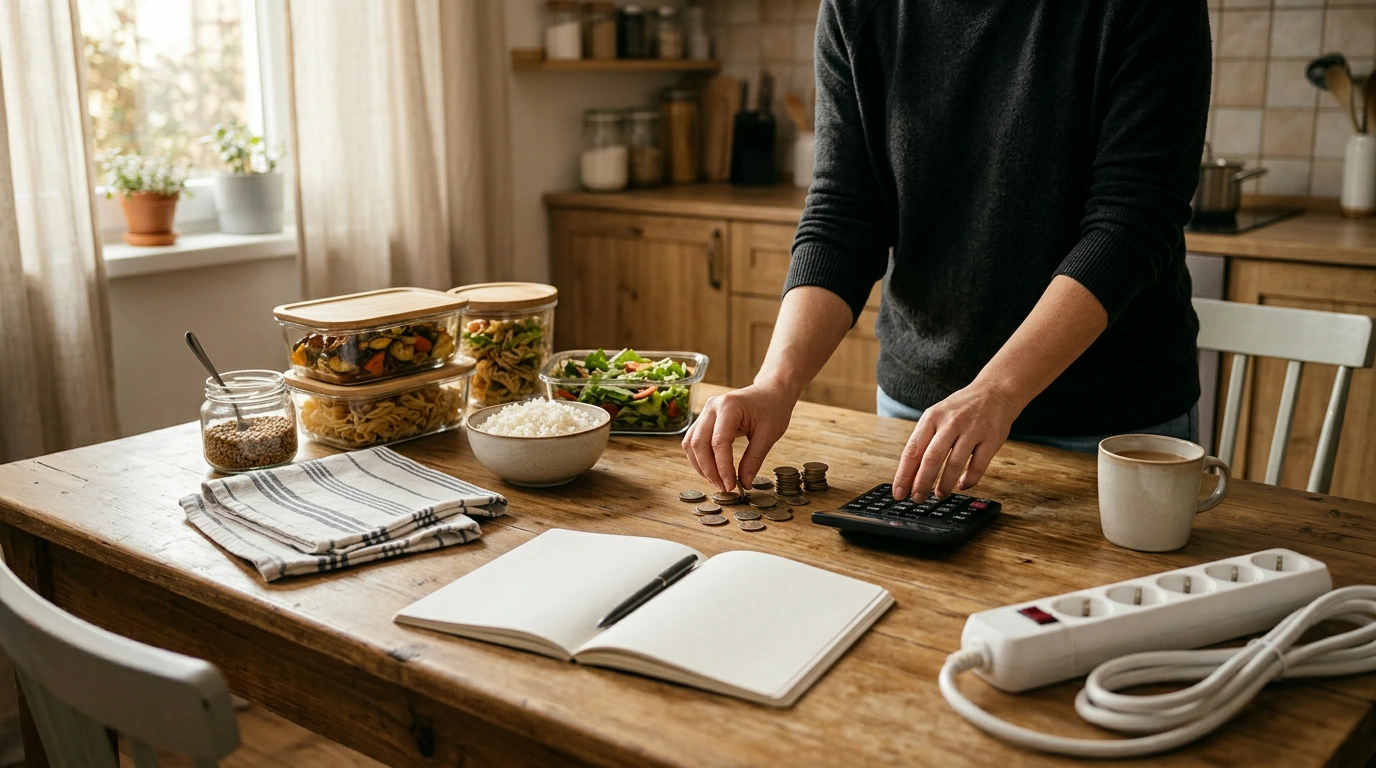
- Lower the cost of food first: plan 4–6 repeatable meals, shop with a short list, and use a “use-it-up” day to reduce waste.
- Trim subscriptions and memberships: keep only the ones used weekly; rotate streaming services monthly instead of stacking them.
- Negotiate or shop around once per year for insurance, internet, and phone plans; small reductions compound over time.
- Switch to “default frugal”: keep staples stocked (rice, pasta, beans, frozen veg) so takeout becomes the exception, not the rescue.
| Area | Quick Win | Ongoing Habit | Typical Payoff |
|---|---|---|---|
| Groceries | Plan 5 dinners before shopping | Use a pantry/freezer inventory list | Lower weekly spend and less food waste |
| Subscriptions | Cancel 1 unused service | Rotate 1–2 services/month | Cuts recurring monthly bills |
| Utilities | Adjust thermostat a few degrees | Seal drafts + mindful usage | Lower seasonal spikes |
| Household | Stop duplicate buying | One-in, one-out purchasing rule | Fewer impulse purchases |
Utility and Energy Habits That Add Up
Utilities can feel “fixed,” but a handful of behavior shifts can reduce spikes and smooth out monthly surprises. Focus on changes that don’t require big upgrades.
- Focus on the big drivers: heating/cooling behavior, water heating, and always-on devices.
- Use power strips for entertainment setups and chargers to reduce standby use.
- Wash laundry in cold water when possible and run full loads; air-dry some items to cut dryer time.
- Set a monthly “utility review” reminder to compare bills and spot unusual spikes early.
For additional ideas grounded in national guidance, the U.S. Department of Energy’s Energy Saver resources are a solid reference for practical household energy habits.
Sustainable Living Choices That Also Save Money
| Swap | What to Do | Why It Saves |
|---|---|---|
| Paper towels | Use cloth rags + a small stash of paper for messes | Lower repeat purchases |
| Disposable cleaners | Use refill concentrates or simple DIY mixes | Cheaper per use over time |
| Single-use bottles | Refillable bottle + filtered water if needed | Reduces frequent convenience buys |
| New-only shopping | Secondhand first for non-essentials | Cuts big-ticket spending |
For more on practical waste reduction basics, the EPA’s Reduce, Reuse, Recycle guidance is a helpful starting point.
Make Budgeting Easier With Simple Systems
If you need a budgeting refresher with clear definitions and tools, the Consumer Financial Protection Bureau (CFPB) budgeting resources are a trustworthy, straightforward reference.
A Practical Digital Guide to Keep the Momentum
- A structured guide can help turn scattered tips into a repeatable routine for home budgeting and everyday savings.
- Look for step-by-step prompts, checklists, and quick-start actions that can be applied immediately without complex spreadsheets.
- Choose a guide that blends cost-cutting with sustainable living so savings come from less waste, not constant sacrifice.
- Smart Savings: How to Save Money at Home and Make Every Dollar Count is designed as a practical, at-home savings companion that supports budgeting, waste reduction, and daily spending decisions.
Another “money-saving at home” shortcut is reducing duplicate purchases by organizing what you already own—especially linens, seasonal clothing, and bulky items. The Large Capacity Non-Woven Clothes & Quilt Storage Bag Organizer can help keep extras visible and contained, so you’re less likely to rebuy what’s already in the closet.
30-Day “Make Every Dollar Count” Home Challenge
| Week | Action | Goal |
|---|---|---|
| 1 | Audit subscriptions and recurring charges | Remove 1–2 monthly leaks |
| 2 | Plan meals and shop with a list | Reduce waste and impulse buys |
| 3 | Cut energy and water waste | Lower utility costs |
| 4 | Repair/borrow/secondhand first | Spend less on replacements |
FAQ
What is the fastest way to save money at home?
Prioritize recurring costs and food: cancel unused subscriptions, plan meals for the week, reduce takeout, and make one utility habit change (like adjusting the thermostat or switching to cold-water laundry). These moves usually create immediate, noticeable savings without major lifestyle disruption.
How much should a beginner put into savings each month?
Start with a small, consistent amount that won’t cause backsliding—often 1–5% of take-home pay—then increase once bills and essentials feel stable. Automating transfers makes it easier to stay consistent.
How can sustainable living actually reduce expenses?
Sustainable habits reduce repeat purchases and waste: using reusables, buying secondhand, repairing items, and consuming what’s already at home lowers both the frequency and size of shopping trips. Over time, that means fewer “replacement” buys and less spending driven by convenience.















Leave a comment