Power Arms Ebook: Simple Plan for Sculpted Arms
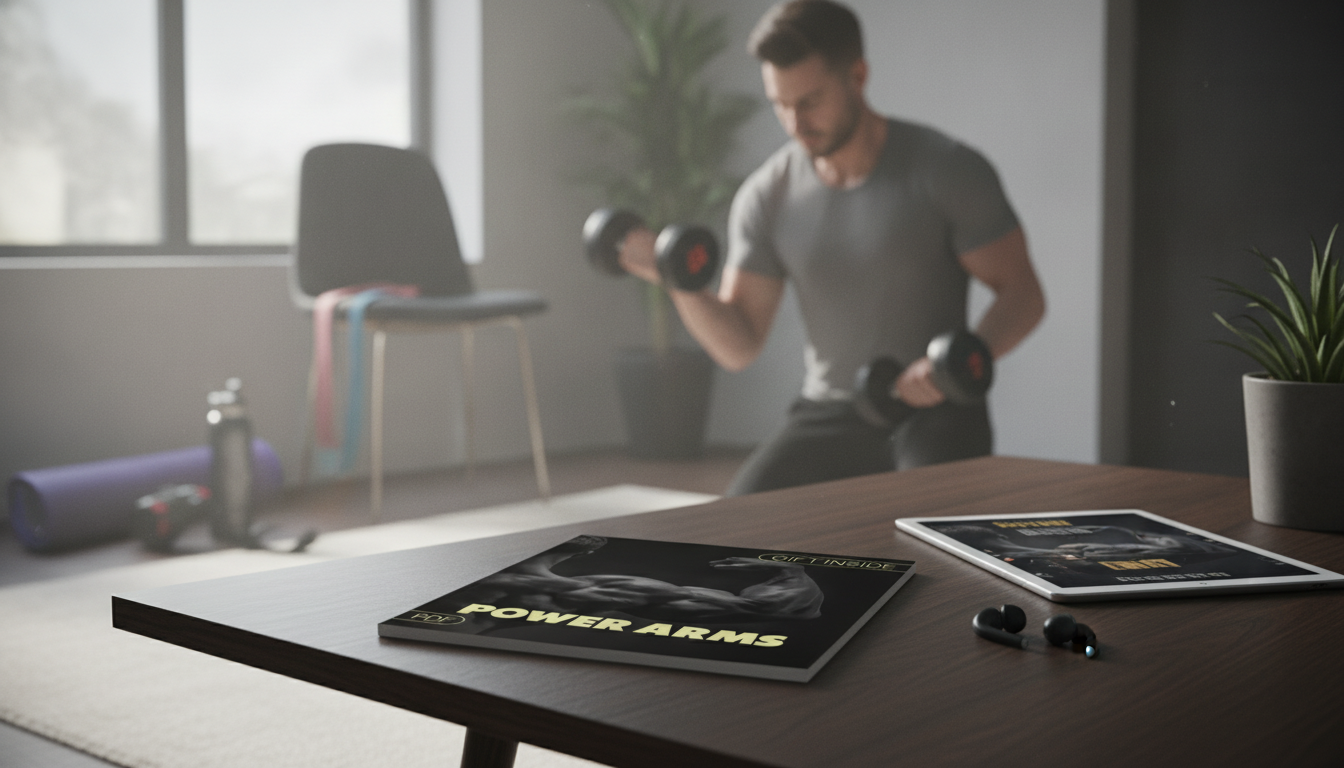
Power Arms: A Simple, Repeatable Path to More Sculpted Arms
Power Arms is a downloadable workout guide built for stronger, more defined arms without complicated programming. It focuses on clear routines, progression ideas, and a practical training structure that works whether you train at home with minimal equipment or in a fully equipped gym. Sessions are designed to be efficient, so busy schedules can still support consistent arm growth through repeatable plans and smart exercise selection.
If you want a straightforward way to train biceps, triceps, shoulders, and forearms with balanced volume—and you’d rather spend your energy training than guessing—this guide is made for that.
What this guide helps improve
- Arm definition by training biceps, triceps, shoulders, and forearms with balanced volume
- Strength and muscle endurance through structured sets, reps, and rest periods
- Consistency with repeatable weekly routines that reduce guesswork
- Better exercise selection by pairing compound moves with targeted isolation work
- Training efficiency for short sessions without skipping key muscle groups
Programming that’s easy to repeat matters because progress is mostly the result of consistent effort plus gradual overload over time. For general resistance-training guidelines and progression concepts, see the ACSM position stand on progression models and the NSCA overview of resistance training for health and fitness.
Who it’s for
- Beginners who want a clear starting point and simple progressions
- Intermediate lifters who want more structure for arm specialization blocks
- Home trainees using bodyweight, resistance bands, or adjustable dumbbells
- Gym trainees looking for focused arm days alongside a full-body plan
- Anyone who wants a plan that can scale up or down based on time and recovery
How to use the ebook effectively
- Choose a schedule that fits: 2–4 arm-focused sessions per week depending on overall training load
- Keep a simple log: exercises, sets, reps, and load (or band tension) to track progress
- Prioritize form: controlled tempo and full range of motion before increasing volume
- Use progressive overload: add reps first, then sets, then load, while keeping good technique
- Plan recovery: leave at least 48 hours between hard arm sessions when possible
Simple progression options
| Goal | What to adjust | Example |
|---|---|---|
| Add muscle | Increase weekly sets | Move from 8 to 12 total sets for triceps across the week |
| Get stronger | Increase load, keep reps steady | Stay at 6–8 reps and add weight gradually |
| Improve definition/endurance | Increase reps or reduce rest | Go from 10 reps to 15 reps with 30–45s rest |
| Train at home | Adjust leverage/band tension | Use slower tempo or a stronger band to raise difficulty |
Key training principles for sculpted arms
- Balance push and pull: match biceps work with triceps and shoulder work for symmetry
- Include both heavy-ish sets and higher-rep pump work to cover multiple adaptation ranges
- Train shoulders for the “cap” look: lateral and rear delts help arms appear more defined
- Don’t skip forearms and grip: stronger grip supports better pulling mechanics and overall arm development
- Use exercise variety strategically: change angles (overhead, close-grip, neutral grip) to hit fibers differently
For overall activity recommendations that support health and recovery, the CDC physical activity basics provide a helpful baseline to keep training sustainable alongside daily life.
Sample weekly structure (adjustable to home or gym)
- Day 1: Triceps emphasis + shoulders (pressing pattern + isolation finishers)
- Day 2: Biceps emphasis + upper back (pulling pattern + curls variation)
- Day 3: Optional pump session (lighter loads, higher reps, shorter rest)
- Active recovery: mobility for shoulders/elbows/wrists and light cardio
- Progress check every 2–4 weeks: add a set to lagging areas or increase load
Example arm session template
| Block | Exercise type | Typical set/rep range |
|---|---|---|
| A | Main compound (push or pull) | 3–4 sets of 6–10 reps |
| B | Secondary compound or angle change | 3 sets of 8–12 reps |
| C | Isolation superset (biceps + triceps) | 2–4 rounds of 10–15 reps |
| D | Finisher (pump/grip/forearms) | 1–3 rounds of 15–25 reps or timed holds |
Equipment options and substitutions
- Dumbbells: curls, overhead extensions, kickbacks, lateral raises, hammer curls
- Resistance bands: pressdowns, curls, triceps extensions, face pulls; easy to scale tension
- Bodyweight: close-grip push-ups, bench/box dips (range adjusted), pike push-ups
- Cable or machine (gym): pressdowns, cable curls, lateral raises for steady resistance
- If elbows get irritated: reduce load, increase control, and prioritize pain-free ranges
Common mistakes that slow progress
Download details and what to expect
For a supportive add-on that fits well with recovery and consistency habits, consider Using AI to Track and Enhance Your Daily Meditation Practice.
Quick product snapshot
| Item | Details |
|---|---|
| Product | Power Arms: The Ultimate Digital Guide to Sculpted Arm Workouts (Ebook Download) |
| Type | Digital download |
| Price | 5.99 USD |
| Availability | In stock |
FAQ
How many days per week should arms be trained for visible results?
Most people do well with 2–4 arm-focused sessions per week, depending on how much total upper-body training they’re already doing. Start at the lower end, recover well, and add sets or an extra day only if performance and soreness stay manageable.
Can the workouts be done at home without a full gym?
Yes—arm training adapts extremely well to home setups using bodyweight, resistance bands, and adjustable dumbbells. Progress by adding reps, slowing tempo, changing leverage, increasing band tension, or adding sets while maintaining clean form.
How long does it usually take to see more defined arms?
Many people notice changes in 4–8+ weeks, with faster results when training is consistent and progressively challenging. Your starting point, nutrition, sleep, overall body fat level, and recovery habits all influence how quickly definition shows up.















Leave a comment