Modern Collapsible Acrylic & Wood Dog Crate Guide
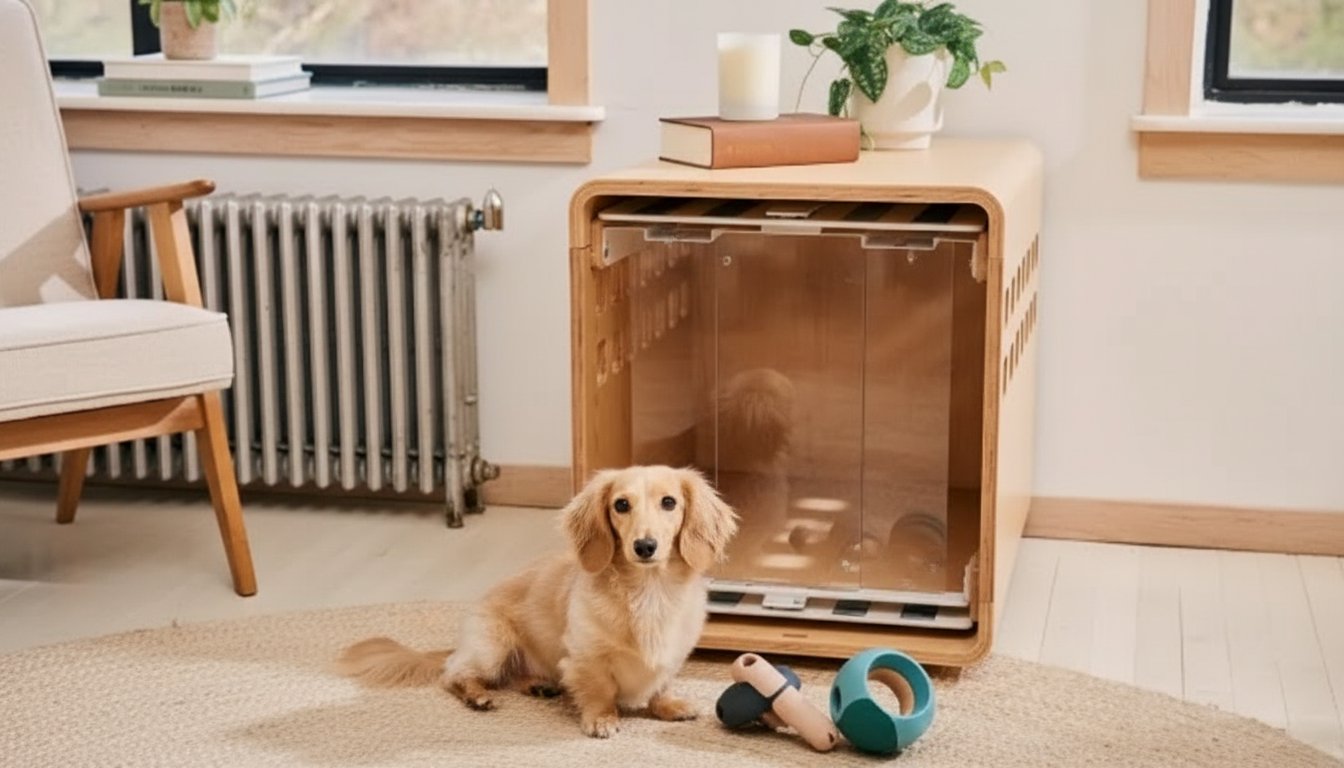
Stylish Collapsible Acrylic & Wooden Dog Crate That Fits Modern Living
A dog crate can be safe, practical, and still feel like it belongs in a well-designed home. This collapsible acrylic-and-wood crate is built to blend into living spaces while offering a secure spot for rest, calm-down time, and everyday routines—without the heavy “kennel” look.
What Makes an Acrylic-and-Wood Crate Different
Traditional wire crates do the job, but they rarely look intentional in a finished room. An acrylic-and-wood crate shifts the experience from “pet gear” to furniture-forward design—especially in open-concept homes where everything is visible.
- Furniture-forward materials that complement modern interiors better than standard wire crates
- Acrylic panels support visibility, which can help some dogs settle when they can see their surroundings
- Wood framing adds structure and a warmer look compared with all-plastic designs
- A more “home-like” enclosure can reduce the need to hide the crate in a back room
For training guidance that prioritizes comfort and humane routines, references like American Kennel Club crate training tips and The Humane Society’s crate training basics are helpful for building positive associations.
Collapsible Design: When Foldability Matters
Foldability isn’t just about convenience—it can be the difference between consistent use and a crate that stays in storage. A collapsible model works well when your space or schedule changes frequently.
- Easier storage between training phases, travel days, or when guests visit
- Helpful for apartments and multipurpose rooms where floor space changes week to week
- Look for secure latching and stable joints so foldability doesn’t compromise sturdiness
- Plan a consistent setup spot so the crate remains a predictable “safe zone” for the dog
Quick checklist for day-to-day practicality
| Need | Why it matters | What to check |
|---|---|---|
| Space-saving storage | Reduces clutter when the crate isn’t needed | Folded footprint and how it stores (flat vs. bulky) |
| Easy cleaning | Keeps odors and buildup from becoming a long-term issue | Wipeable acrylic, accessible corners, removable tray if included |
| Stable placement | Prevents shifting or rattling that can stress dogs | Non-slip feet, rigid frame, no wobble when pushed lightly |
| Low-noise use | Helps anxious or light-sleeping dogs | Doors and panels that don’t rattle during movement |
Comfort and Calm: Setting Up the Interior
Even the best-looking crate should feel inviting. The goal is a calm, predictable environment—especially during early training or when the household is busy.
- Choose a supportive crate mat or bed that fits without bunching at the edges
- Add a light cover only if the dog settles better with reduced visual stimulation (avoid blocking airflow)
- Keep water access appropriate to the dog and duration (short rests vs. longer periods)
- Place the crate away from heat vents and direct sun to prevent acrylic from warming the interior
Acrylic’s clarity is a major advantage, but placement matters: bright afternoon sun can turn any enclosed space warmer than expected. A shaded corner with steady airflow tends to feel more consistent throughout the day.
Sizing and Fit: Getting the Right Dimensions
Choosing the right size is one of the biggest factors in whether a crate feels secure and usable. A proper fit supports comfort while keeping routines clear and consistent.
- A proper crate size typically allows the dog to stand, turn around, and lie down comfortably
- Too large can slow housetraining for some dogs; too small can cause stress and poor rest
- Measure the dog (nose to base of tail; floor to top of head/ears) and compare with the crate’s interior measurements
- If between sizes, consider the dog’s growth stage and whether a divider is available or needed
When comparing sizes, focus on interior space rather than exterior dimensions. Thick wood framing can make a crate look roomy on the outside while reducing usable interior width.
Safety Considerations for Acrylic Panels and Wood Frames
Safety should be obvious at a glance and reassuring in daily use. Before committing to any crate style, verify build quality where it matters most: edges, doors, ventilation, and stability.
- Check for smooth edges and well-finished corners to reduce snagging or scratching risks
- Ensure ventilation is adequate; airflow should be consistent even if the dog lies close to a panel
- For strong chewers or escape artists, confirm door strength, latch reliability, and panel thickness suitability
- Position cords, blinds, and nearby objects out of reach so the crate area remains hazard-free
For broader household safety and behavior awareness—especially around visitors—resources like the AVMA’s dog safety guidance can help reinforce calm, structured routines.
Cleaning and Maintenance for a Like-New Look
Where This Style Works Best in the Home
Shop Coordinated, Modern Pieces
- Stylish Collapsible Acrylic & Wooden Dog Crate
- Rustic Wood Sideboard
- Southeast Asian-Inspired Bamboo and Rattan Pendant Chandelier
FAQ
Is an acrylic-and-wood dog crate safe for everyday use?
It can be safe for daily use when it has smooth edges, reliable latches, steady ventilation, and a stable base. For dogs that chew heavily or try to escape, confirm the crate is built and rated to handle that behavior and supervise early on as your dog adjusts.
How do you clean acrylic panels without scratching them?
Use a clean microfiber cloth with a non-abrasive cleaner and wipe gently to lift dust and smudges. Avoid rough sponges and harsh chemicals like ammonia or strong solvents, which can haze acrylic over time.
What size crate does a dog need?
A crate should be large enough for your dog to stand up, turn around, and lie down comfortably. Measure your dog and compare those numbers to the crate’s interior dimensions; a crate that’s too large or too small can make routines harder, so use a divider if your dog is between sizes or still growing.















Leave a comment