Mid-Century Cubby Bookcase for Kids’ Toys & Books
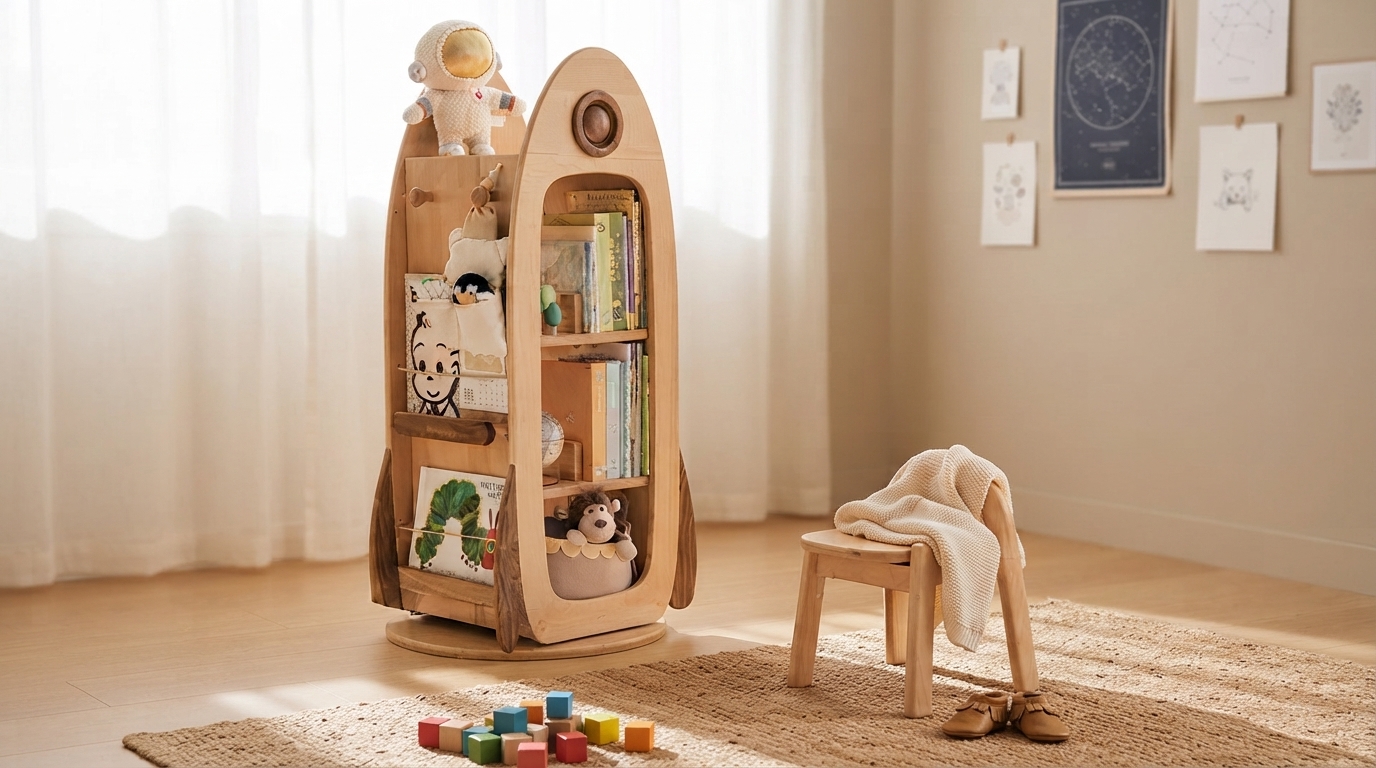
Mid-Century Modern Bookcase & Toy Storage Cubby for Small Spaces
A well-designed storage piece can do double duty: display books and decor while keeping toys easy to find and quick to put away. This mid-century inspired bookcase with cubbies is built for compact rooms, helping create calm, organized zones without feeling bulky or out of place.
If you’re building a flexible “family corner” that can handle picture books, puzzles, and the everyday shuffle, take a look at the Mid-Century Modern Bookcase & Toy Storage Cubby for Small Spaces—it’s the kind of piece that looks intentional even when real life gets busy.
Why This Style Works in Compact Rooms
Small spaces benefit from furniture that feels visually light, and mid-century modern tends to deliver exactly that. With clean lines and balanced proportions, the silhouette reads “open” rather than heavy, which helps a room feel less crowded.
Open shelving and cubbies also reduce the daily friction of putting things away. When essentials stay visible, there’s less rummaging, fewer “where did it go?” moments, and a better chance everything returns to its place. And because a combined bookcase-and-toy solution does the job of multiple pieces, you can free up floor space for play, a reading nook, or simply clearer walkways.
Smart Storage Layout: Books Up Top, Toys Within Reach
A simple rule makes these units work hard: store “look at” items higher and “use every day” items lower. Upper shelves are ideal for books, framed prints, and keepsakes—anything that benefits from a vertical display and doesn’t need constant grabbing.
Lower cubbies are where the magic happens for families. When toys are stored within reach, kids can sort, choose, and return items independently. Pair cubbies with bins or baskets to group sets—blocks, dolls, cars, art supplies—so clean-up takes minutes instead of becoming a whole event. For the most realistic routine, keep one cubby intentionally open as a quick “drop zone” for end-of-day resets.
Simple Cubby Zoning Ideas
| Zone | Best For | Tip |
|---|---|---|
| Top shelves | Books and decor | Leave some empty space to avoid a crowded look |
| Middle shelves | Rotating toys or puzzles | Rotate weekly to keep interest high |
| Lower cubbies | Daily toys and baskets | Add labels or picture tags for easy sorting |
| One “drop zone” cubby | Fast cleanup | Empty and re-sort once or twice a week |
Room-by-Room Placement Ideas
Living room
In shared spaces, a cubby bookcase can act like a “family storage wall”: adult-friendly styling up top, kid-friendly storage below. Use baskets to hide bright plastic toys and keep the overall look cohesive with the rest of your decor. If you’re curating a more elevated living room setup, pairing storage with a statement piece such as the Luxury Marble Round Coffee Table with Gold Stainless Steel Base can help the room feel polished while still being practical.
Nursery or kids’ bedroom
Place the unit so cubbies sit on the lower half for easy, safe access. Keep storytime favorites on upper shelves (still reachable for an adult), and reserve the lowest bins for daily go-tos like stuffed animals, blocks, or dress-up accessories.
Home office corner
A toy cubby tucked into an office corner can support “work-from-home with kids” routines—kids have an obvious place to pick activities and an obvious place to put them back. The goal is a fast reset between meetings, not a perfect showroom. A dedicated “drop zone” cubby is especially helpful here.
Entryway or hallway nook
If you have a narrow niche, use a compact bookcase/cubby to store small toys and books that travel between rooms. This can reduce the tendency for items to migrate across the house. For seasonal overflow—like extra linens, outgrown clothes, or bulky textiles—stash them nearby in the Large Capacity Non-Woven Clothes & Quilt Storage Bag Organizer to keep closets and cubbies focused on daily-use items.
How to Measure Before Buying
Measuring well prevents the most common small-space regret: a piece that technically fits, but makes the room feel tight. Start with the intended wall width and leave clearance for baseboards, vents, and outlets. Then check depth—shallow pieces feel less intrusive in narrow rooms, while deeper shelves can handle larger bins.
Quick Measurement Checklist
| What to Measure | Why It Matters | Quick Note |
|---|---|---|
| Wall width | Prevents overcrowding | Leave breathing room on both sides if possible |
| Available depth | Maintains walkability | Consider door swing and traffic flow |
| Shelf height reach | Supports daily use | Lower storage improves independence for kids |
| Cubby opening size | Ensures bin compatibility | Account for handles and fabric edges |
Practical Styling That Still Looks Grown-Up
Care, Safety, and Everyday Durability
In kids’ spaces, safety is part of everyday function. Anchor tall furniture to the wall when recommended, especially in rooms where children climb, pull, or use shelves to steady themselves. The U.S. Consumer Product Safety Commission provides guidance on reducing tip-over risk at CPSC Furniture Tip-Over Prevention, and the industry tip-over standard for certain storage units is outlined in ASTM F2057.
FAQ
Is a cubby bookcase better than a toy chest for small spaces?
Cubbies make it easier to see and sort toys, especially when paired with bins, while toy chests are better for fast hiding but can become “everything piles.” In small spaces, vertical cubby storage often frees up floor area and simplifies daily cleanups.
How do you keep a toy cubby from looking messy?
Use matching bins, add simple labels, and limit the number of open cubbies so most items are visually contained. Rotating toys and keeping one dedicated overflow “drop zone” cubby also helps prevent clutter from spreading.
Do I need to anchor this type of bookcase in a child’s room?
Follow the manufacturer’s instructions, but anchoring with anti-tip hardware is a smart practice in children’s rooms. It reduces tip risk from climbing, pulling, or accidental bumps during play.










Leave a comment