Kids 12V Ride-On Tractor + Trailer: Safe Hauling Fun
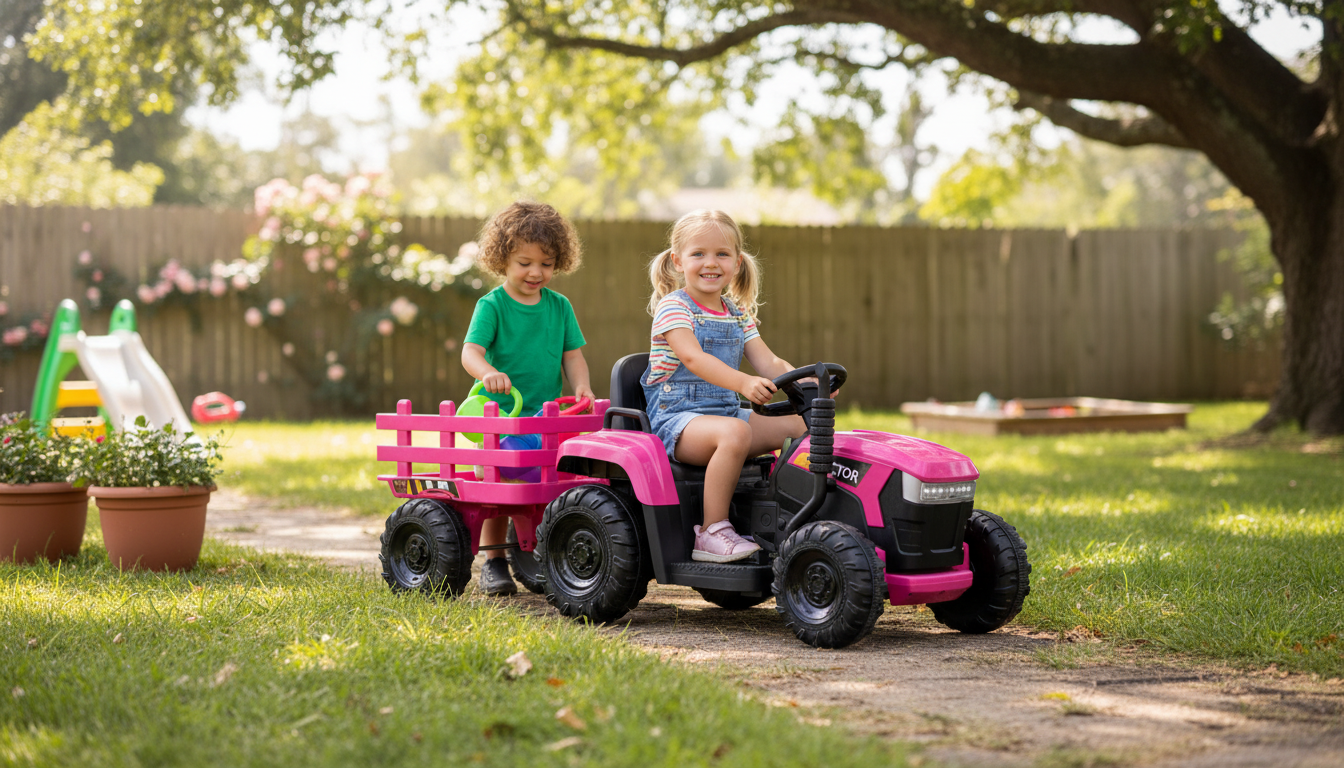
Kids 12V Ride-On Tractor with Trailer: Outdoor Play That Hauls, Tows, and Teaches
A ride-on tractor with a trailer turns backyard driving into real “work” play—hauling toys, moving garden supplies, and building coordination. The best sets balance battery power with kid-friendly controls, stable handling, and a trailer that’s easy to hitch, load, and unload without constant adult intervention.
What Makes a Ride-On Tractor with Trailer Different
A tractor-and-trailer combo adds a “mission” to riding, which often keeps kids engaged longer than aimless laps. Instead of simply driving, they’re planning a route, picking up cargo, and delivering it to a destination.
- Purpose-driven play: haul stuffed animals, sand toys, light yard items, or pretend farm “cargo.”
- Skill-building: steering and stopping build gross motor control; loading and balancing build planning skills.
- Better for shared play: one child can drive while another loads/unloads at the station.
- Outdoor-ready vibe: tractor styling often includes chunkier wheels and a higher-ground feel for backyard routes.
Quick Specs Snapshot: Kids 12V Ride On Tractor with Trailer
A 12V ride-on is a common step up from basic 6V models, especially when kids are driving outdoors and occasionally towing. The trailer is designed for frequent loading/unloading, which makes it feel less like a “toy add-on” and more like part of the game.
At-a-glance buying checklist
| Feature | Why it matters | What to confirm before buying |
|---|---|---|
| Battery & voltage | Affects torque and overall drive feel | 12V system; charging time and included charger details |
| Weight limit | Determines how long it fits as a growing toy | Max rider weight; whether towing changes performance |
| Drive system | Helps with grass and mild slopes | Two-wheel vs. multi-wheel drive; traction design |
| Speed options | Controls learning curve and safety | Low/high speed or parental control features |
| Trailer capacity | Defines how useful hauling play will be | Rated load, attachment stability, ease of hitching |
| Safety features | Reduces common ride-on risks | Seat belt, stable wheelbase, smooth start/stop, braking behavior |
| Terrain suitability | Prevents frustration and stalled rides | Recommended surface types and incline guidance |
Battery, Runtime, and Charging Habits That Extend Lifespan
Runtime is never one-size-fits-all. Rider weight, surface type, temperature, and how often the trailer is loaded all affect how long a 12V ride-on keeps moving with confidence.
- Expect variation: paved routes generally run longer than grass, and towing heavier “cargo” can shorten playtime.
- Charge after each session: topping up after play is easier on many ride-on batteries than leaving them depleted.
- Avoid frequent deep drains: running to zero over and over can reduce performance over time.
- Store indoors: a dry, moderate-temperature space helps protect the battery from extreme heat or cold.
- Inspect charging parts: keep the port and cable clean and undamaged to prevent intermittent charging.
Where It Drives Best: Terrain and Route Planning
The “best” surface depends on your child’s experience level and your yard layout. Start simple, then add challenges as skills improve.
- Flat pavement is ideal for beginners: it makes steering feedback predictable and stopping distances easier to learn.
- Short grass and packed dirt add adventure: expect slower speeds, especially on thick turf or wet ground.
- Plan gentle routes: wide turns, fewer tight corners, and a clear “parking zone” for trailer unloading.
- Keep away from hazards: avoid pools, steps, steep driveways, and vehicle traffic.
- Build a “farm road” loop: use cones or chalk lines to mark lanes plus a loading station.
For broader outdoor safety guidance, helpful references include the U.S. Consumer Product Safety Commission toy safety guides and the American Academy of Pediatrics outdoor safety tips.
Safety Setup Before the First Ride
A confident first ride comes from a good setup: clear boundaries, a simple driving “job,” and a quick lesson that matches a kid’s attention span.
- Pick a supervised zone: define a boundary with cones, chalk, or yard markers—no street access.
- Teach three basics: start slowly, steer wide, and stop before making a tight turn with a loaded trailer.
- Keep cargo light and stable: avoid long items that can snag on wheels, plants, or patio edges.
- Dress for riding: closed-toe shoes; avoid scarves, loose drawstrings, and dangling accessories.
- Check seating and hands: confirm proper seating position and belt use (if included), and keep hands away from moving parts.
For families who like to go deeper on standards, ASTM publishes an overview of toy safety standards at ASTM International.
Trailer Play Ideas That Keep Kids Engaged Longer
The trailer is where “driving” turns into imaginative problem-solving. Rotating games also helps reduce the urge to overload the trailer just to make things more exciting.
Care and Maintenance for Smooth Driving
When This Tractor-and-Trailer Set Is a Good Fit
In-Stock Picks
- Kids 12V Ride On Tractor with Trailer
- Luxury Marble Round Coffee Table with Gold Stainless Steel Base
- Rustic Wood Sideboard
FAQ
How long does a 12V ride-on tractor usually run on a charge?
Runtime varies with rider weight, surface type (pavement vs. grass), temperature, and how much “cargo” the trailer carries. A practical approach is to plan for variable play sessions and recharge after use while avoiding frequent full drain-to-zero rides.
Can the trailer carry heavy items like rocks or large bags of soil?
It’s best to stick to light, kid-safe loads because heavy cargo can reduce control, increase tipping risk, and strain the drive system. Choose toys, small garden items, or pretend “farm goods,” and always check the trailer’s rated capacity for guidance.
What’s the safest surface for kids to drive a ride-on tractor?
Flat, dry pavement or smooth packed surfaces are typically the safest for learning, since traction and stopping are more predictable. Avoid steep slopes, wet grass, loose gravel, and any area near roads or water, and supervise at all times.














Leave a comment