Your Dog’s First Month: Week-by-Week Checklist
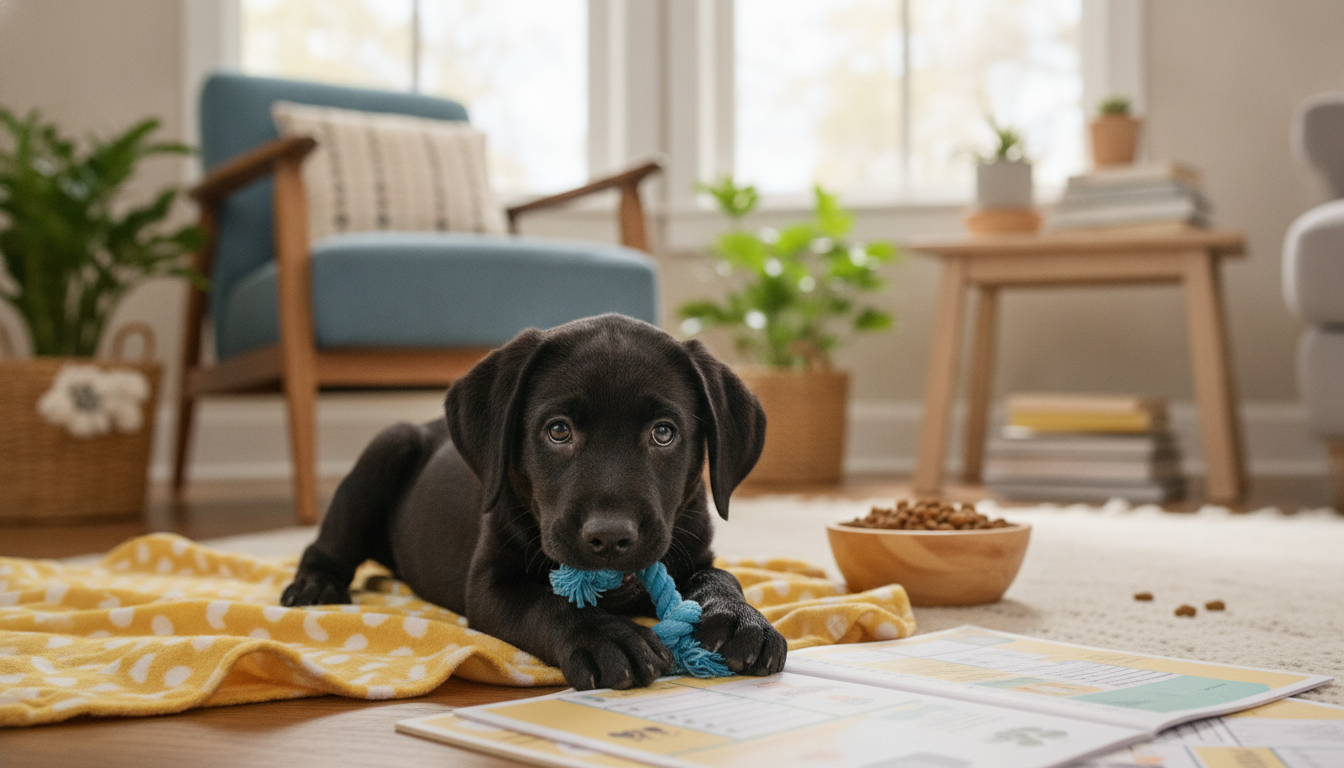
First Month With Your Dog: A Fun, Easy Checklist for a Smooth Start
The first 30 days with a new dog set the tone for routines, confidence, and trust. A clear plan helps cover the essentials—home setup, health, training, socialization, and daily care—without feeling overwhelming. Use the week-by-week checklist below to keep progress steady and stress low, even if your household is busy.
Before Day 1: Set Up a Safe, Predictable Home Base
Before your dog arrives, aim for “calm and consistent” rather than perfect. A simple home base and a few guardrails reduce accidents, chewing, and anxiety.
- Choose one primary “home base” area (crate or bed zone) away from heavy foot traffic for rest and decompression.
- Dog-proof the space: secure cords, remove toxic plants/foods, block stairs, and store cleaners/medications out of reach.
- Stock essentials: crate or bed, baby gates, bowls, ID tag, leash/harness, poop bags, enzymatic cleaner, chew toys, grooming basics.
- Plan the first night: quiet space, last potty break, and a consistent bedtime routine to reduce anxiety.
- Decide house rules early (furniture access, feeding areas, off-limits rooms) and keep them consistent for everyone.
Quick Home Setup Checklist
| Area | What to Prepare | Why It Helps |
|---|---|---|
| Sleep zone | Crate/bed, blanket, safe chew | Creates calm and reduces pacing/whining |
| Feeding station | Bowls, measured scoop, storage bin | Supports routine and prevents overfeeding |
| Potty plan | Designated outdoor spot + cleaning kit | Speeds up house training and reduces repeat accidents |
| Safety | Gates, closed doors, cord management | Prevents injury and destructive habits |
| Enrichment | Puzzle toys, chews, sniffing games | Burns energy and builds confidence |
Days 1–3: Decompression, Bonding, and the First Routine
The first few days should feel “small.” Your dog is learning new smells, sounds, and expectations, so focus on gentle structure.
- Keep the schedule simple: potty, eat, rest, short play, repeat—avoid overloading with visitors and new places.
- Start a predictable potty rhythm (after waking, after eating/drinking, after play, and every 1–2 hours for young puppies).
- Use calm bonding: hand-feed a portion of meals, gentle handling, and short name-recognition games.
- Introduce the crate/bed gradually with treats and open-door time; keep sessions brief and positive.
- Begin a habit tracker: food amounts, potty times, sleep, energy level, and any symptoms to share with a vet.
If you want a one-page format that’s easy to print and share with family members, consider a dedicated planner like First Month With Your Dog: The Fun & Easy Checklist (Printable + Digital Pet Care Planner).
Week 1: Health Basics and a Vet Plan
Early health planning prevents small issues from turning into long, stressful weeks.
- Schedule a veterinary visit early (especially for new puppies or rescue dogs) to review vaccines, deworming, flea/tick prevention, and overall health.
- Discuss diet, ideal body condition, and treat limits; ask about safe chew options and GI upset prevention during transitions.
- Ask about microchipping, licensing requirements, and spay/neuter timing if applicable.
- Start a simple grooming routine: brief brushing, paw handling, and a calm “inspect” cue to check ears, teeth, and skin.
- Create an emergency plan: nearest emergency clinic, poison control contacts, and what to do if the dog eats something unsafe.
For general pet-health guidance and preventive care basics, the American Veterinary Medical Association (AVMA) pet owner resources are a solid reference.
Week 2: House Training and Alone-Time Skills
Week 2 is about tightening routines. The more consistent the environment, the faster your dog learns what works.
- Tighten the potty schedule and reduce freedom indoors until accidents are consistently rare.
- Reward the exact moment potty happens outside; keep treats by the door for speed and consistency.
- Introduce short, planned alone-time sessions (1–5 minutes to start) paired with a safe chew or food puzzle; return before distress escalates.
- Rotate enrichment: sniff walks, scatter feeding, short training bursts, and tug/fetch with clear start/stop cues.
- Watch for signs of separation stress (panic, drooling, frantic destruction); if present, slow down alone-time training and consult a professional.
Tip for staying organized: setting up one “pet station” with wipes, bags, treats, and cleaning supplies reduces scrambling. A simple organizer like the Large Capacity Non-Woven Storage Bag Organizer can keep extras (liners, towels, backup leashes) in one grab-and-go place.
Week 3: Socialization, Confidence, and Calm Exposure
Socialization isn’t about flooding your dog with experiences—it’s about pairing new things with safety and good outcomes.
For a practical overview of puppy socialization (timing, pacing, and positive exposure), see the AKC puppy socialization guidance. For household health and hygiene basics, the CDC Healthy Pets, Healthy People hub is also helpful.
Week 4: Foundation Training and Long-Term Habits
Printable-Friendly Daily Routine (Simple Template)
If you prefer a ready-to-use format you can print or keep on your phone, Printable first-month checklist and digital pet care planner makes it easier to stay consistent without reinventing your routine each day.
FAQ
What should be prioritized in the first week with a new dog?
Focus on decompression and predictability: a steady potty/feeding/sleep routine, low-pressure bonding, and limited introductions. Scheduling a vet check early helps confirm health status and prevention needs so you can plan with confidence.
How often should a puppy go outside during the first month?
Most young puppies need a potty trip after waking, after meals/drinking, after play, and before bed—often every 1–2 hours at first. Increase time between trips gradually as accidents decrease and your supervision stays consistent.
How can alone-time be started without creating anxiety?
Start with very short departures (1–5 minutes) paired with a safe chew or food puzzle, then return before your dog escalates into distress. Build duration slowly, and if you see panic signs like frantic destruction or heavy drooling, slow the plan down and seek professional help.















Leave a comment