8MP 3D Wheel Aligner for Fast, Repeatable Shop Results
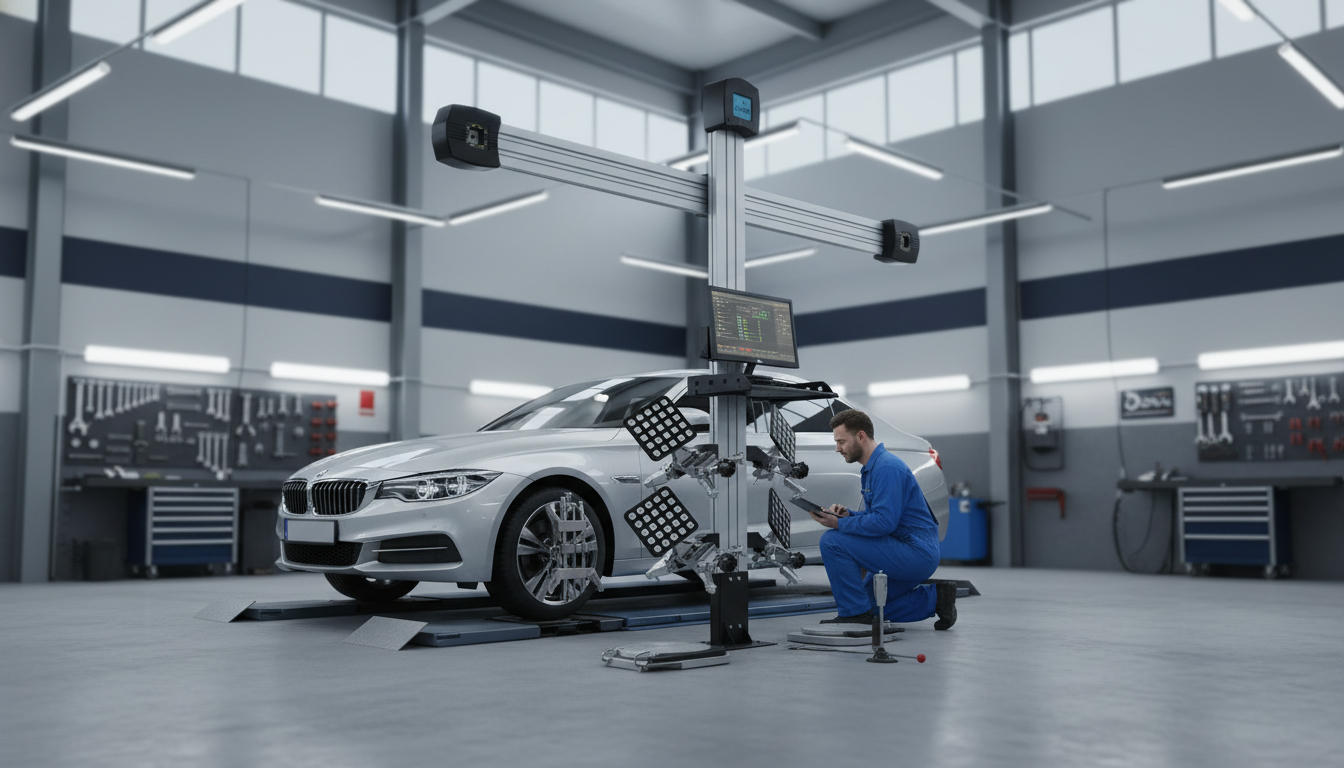
Professional 3D Wheel Alignment for Modern Service Bays
Accurate wheel alignment affects tire life, straight-line stability, steering feel, and even how confidently certain driver-assistance systems perform after service (vehicle-specific requirements apply). A 3D alignment system built around an 8 million pixel camera and purpose-built alignment tools is designed to help shops measure critical angles quickly, pinpoint issues that trigger pull or uneven wear, and generate clear before/after documentation for customers and shop records.
What a 3D wheel aligner does in a modern bay
A 3D wheel aligner uses camera-based imaging and targets to capture the vehicle’s wheel position in three dimensions. That data is then used to calculate alignment angles and guide the technician through measurement and adjustment.
- Captures wheel position data in 3D to calculate alignment angles such as toe, camber, and caster.
- Supports consistent results by reducing manual interpretation compared with purely mechanical methods.
- Helps identify common drivability complaints: steering pull, off-center steering wheel, vibration, and rapid tire wear.
- Creates a repeatable workflow for high-volume service environments where speed and consistency matter.
For tire-focused businesses, the biggest day-to-day value often comes from repeatability: a consistent process that helps reduce comebacks, supports tire wear explanations, and keeps each tech’s results aligned with shop standards.
Why an 8 million pixel camera matters
In a working service bay, lighting can vary, wheels can be finished in reflective materials, and targets can be mounted slightly differently from car to car. A higher-resolution camera can make it easier to recognize targets accurately and maintain stable tracking.
- Higher-resolution imaging can improve target recognition and reduce the chance of misreads caused by reflections or imperfect positioning.
- Supports clearer capture of alignment targets and reference points, especially under mixed lighting in a service bay.
- Can help shorten setup time by making it easier for the system to lock onto targets and maintain tracking.
- Useful for documentation: clearer visuals can support customer reports and technician review.
Camera-driven 3D alignment advantages
| Feature | Practical benefit in the shop |
|---|---|
| 8 million pixel imaging | Improved target clarity and potentially more stable tracking |
| 3D measurement workflow | Faster readings and more consistent technician-to-technician results |
| Enhanced alignment tools | Smoother setup and adjustments during service |
| Before/after reporting capability | Better transparency for customers and recordkeeping |
Enhanced alignment tools: what they add to day-to-day work
A 3D system’s camera is only part of the productivity equation. The right alignment tools and workflow details can reduce “small delays” that add up over a week of alignments.
- Designed to streamline the setup process, reducing time spent repositioning equipment or repeating measurements.
- Supports clearer, more structured steps for technicians during measurement and adjustment.
- Improves service consistency when multiple technicians use the same system across shifts.
- Helps minimize rechecks caused by setup variability, saving bay time.
That consistency matters when your shop is juggling alignments alongside tire installs, suspension repairs, and pre-delivery inspections. A standard process also helps when training newer technicians: fewer “tribal knowledge” steps and more measurable checkpoints.
Key alignment angles and what problems they cause
Wheel alignment is not one number—it’s a set of angles that work together. When one angle is off, it can show up as a tire wear pattern, a steering complaint, or a stability concern at highway speeds.
Symptoms mapped to common alignment causes
| Symptom | Common alignment contributors |
|---|---|
| Uneven tire wear | Toe out-of-spec, camber out-of-spec, worn suspension components |
| Steering wheel off-center | Toe imbalance, thrust angle issues |
| Vehicle pulls left/right | Caster/camber split, tire conicity, brake drag (non-alignment) |
| Vibration after tire install | Wheel balance or runout (often not alignment), but alignment should be verified |
Shop workflow: from vehicle intake to final report
When a vehicle has unusual wear, a quick safety-oriented review of tire condition and maintenance helps set expectations. For consumer-facing tire safety references, see NHTSA Tire Safety and the Tire Industry Association’s tire care resources.
Installation and operating considerations
For shops that want deeper technical context around vehicle dynamics and measurement standards, SAE International is a widely used industry resource hub.
Who this system fits best
Product option
Professional 3D Car Wheel Aligner with 8 Million Pixel Camera & Enhanced Alignment Tools is designed for precise 3D measurements, an efficient workflow, and clear reporting—well suited for bays where alignment volume and documentation quality are priorities. Current price: $6,831.99 (in stock).
More in-stock shop and facility picks
- Rustic Wood Sideboard for organizing shop office or customer lounge materials and supplies.
- Luxury Marble Round Coffee Table with Gold Stainless Steel Base as a premium centerpiece for a waiting area.
- Southeast Asian-Inspired Bamboo and Rattan Pendant Chandelier to elevate lighting aesthetics in a reception space.
FAQ
How often should wheel alignment be checked?
A practical interval is about once a year or every 12,000 miles, plus anytime you install new tires, replace suspension/steering parts, hit a major pothole/curb, or notice pull or uneven wear. Always follow the vehicle manufacturer’s recommendations when they specify different intervals.
Can alignment fix a steering wheel that is off-center?
Often yes—correcting toe and verifying thrust angle commonly recenters the steering wheel when the alignment is set correctly. If the wheel is still off afterward, worn parts, prior improper adjustments, or a required steering angle sensor calibration (vehicle-dependent) may be involved.
Does wheel alignment affect tire wear and fuel economy?
Yes. Incorrect toe and camber can scrub the tires and increase rolling resistance, which accelerates abnormal wear and can reduce efficiency compared with a properly aligned vehicle.
















Leave a comment