Mood Design for Every Room: Light, Color, and Flow
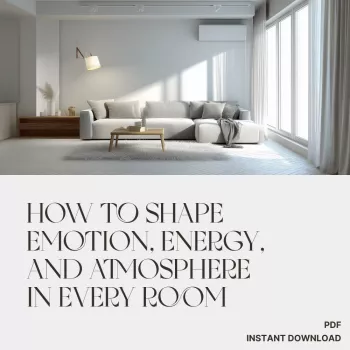
How to Shape Emotion, Energy, and Atmosphere in Every Room
A home can feel calming, focused, cozy, or energizing—often without changing a single wall. Mood design combines interior design choices with basic psychology: light, color, layout, sound, scent, and texture all signal safety, alertness, rest, or connection. This guide breaks mood-building into practical levers that can be adjusted room by room, even with small budgets and rentals.
Start with the room’s job: what the space should make people feel
Before shopping or rearranging, define what the room is “for” emotionally. A space that looks beautiful but feels wrong usually has a mood mismatch: the lighting says “alert,” the layout says “avoid,” or the clutter says “unfinished.”
- Define one primary mood and one secondary mood for each room (example: Bedroom = restful + intimate; Kitchen = lively + clean; Office = focused + steady).
- Identify the main activity cycle: quick transitions (entryway), long dwell time (living room), recovery (bedroom), performance (workspace).
- Choose three non-negotiables that protect the mood (no overhead glare at night, a clear walking path, one soft landing spot like a rug or throw).
- Map friction points that sabotage the mood: clutter hotspots, echo, harsh lighting, uncomfortable seating, awkward traffic flow.
Mood levers by room (quick planning grid)
| Room | Primary mood | Light plan | Color direction | Key texture/material | Signature detail |
|---|---|---|---|---|---|
| Entryway | Welcoming | Warm lamp + clear pathway lighting | Soft neutrals or warm accents | Runner rug + wood | Hook + catch-all tray |
| Living room | Cozy / social | Layered lamps + dimmer if possible | Warm mid-tones, balanced contrast | Textiles + matte finishes | Conversation seating cluster |
| Kitchen | Energized / clean | Bright task lighting + neutral ambient | Light, crisp palette | Easy-wipe surfaces + natural fiber | Clear counter zone |
| Bedroom | Restful | Low, warm bedside lights | Muted, low-saturation hues | Soft bedding + curtains | No-glare mirror placement |
| Bathroom | Refreshing / spa | Even face lighting + soft night light | Calm neutrals, soft greens/blues | Towels + natural stone look | Simple scent cue |
Light: the fastest way to change energy
Lighting is the quickest “mood switch” because it changes how the entire room reads at once—color, contrast, texture, and even perceived cleanliness. If you only fix one thing, fix the light plan.
- Use layers: ambient (overall), task (work areas), accent (art/shelves), and “glow” (candles or LED strips) to create control instead of a single harsh source.
- Match color temperature to the goal: warmer light supports wind-down; cooler light supports alertness—especially in work or grooming zones. The International Commission on Illumination (CIE) is a helpful reference for light and color fundamentals.
- Reduce glare: diffuse shades, bounce light off walls, avoid bare bulbs in direct sightlines, and choose matte surfaces near lights to soften reflections.
- Create evening pathways (hallways, bathroom, stairs) with low-level lighting to keep the home calm at night.
- Use one simple rule: bright + even for tasks; dim + warm for recovery; layered + adjustable for social spaces.
For bedrooms, keeping light low and warm supports sleep routines; the National Sleep Foundation offers practical guidance on light and sleep hygiene.
Color and contrast: guiding emotion without overwhelming the room
Color doesn’t need to be loud to be powerful. Subtle shifts in saturation and contrast can make a room feel grounded, open, intimate, or crisp.
Stress and well-being are closely linked to environmental cues; the American Psychological Association (APA) has accessible overviews of how surroundings can influence stress and behavior.
Layout and flow: emotional comfort comes from ease of movement
If your living area needs a visual anchor that encourages gathering, a substantial round table can soften hard angles and improve flow. Consider a statement piece like the Luxury Marble Round Coffee Table with Gold Stainless Steel Base if it fits your budget and space.
Texture, sound, and scent: the atmosphere layer
Clutter is one of the fastest mood-killers because it adds constant “unfinished” signals. If overflow is your issue, a simple containment upgrade like the Large Capacity Non-Woven Clothes & Quilt Storage Bag Organizer can help keep seasonal items out of sight and off the floor.
Room-by-room mood recipes (quick setups)
Make it easier: a guided plan for mood design
For a deeper, room-by-room framework you can reuse, the digital guide How to Shape Emotion, Energy, and Atmosphere in Every Room | Home Mood Design eBook organizes these levers into a practical plan you can follow with any style. If your goal includes calmer routines alongside your space upgrades, Using AI to Track and Enhance Your Daily Meditation Practice (Digital Download) can help you keep a simple, consistent mindfulness rhythm that matches the mood you’re building at home.
FAQ
What is the quickest way to change the mood of a room without remodeling?
Start with lighting: add a second light source, switch to the right bulb temperature, and reduce glare. Then do a 15-minute reset—clear surfaces, add one soft textile (throw or rug), and remove anything that feels visually “loud.”
How can different rooms feel distinct without the home looking mismatched?
Repeat one connective element across rooms (a consistent warm neutral, matching wood tone, or similar metal finish), then vary accents and lighting to create different moods. This keeps the home cohesive while allowing each space to have its own emotional identity.
Which choices most often make a room feel stressful?
Common culprits are harsh glare, clutter hotspots, echo, tight pathways, overly high contrast, too many small decor items, and inconsistent or overpowering scents. Fixing just one of these—especially glare or clutter—often drops the stress level immediately.









Leave a comment