No-Excuses Gym Checklist: Show Up on Low-Motivation Days
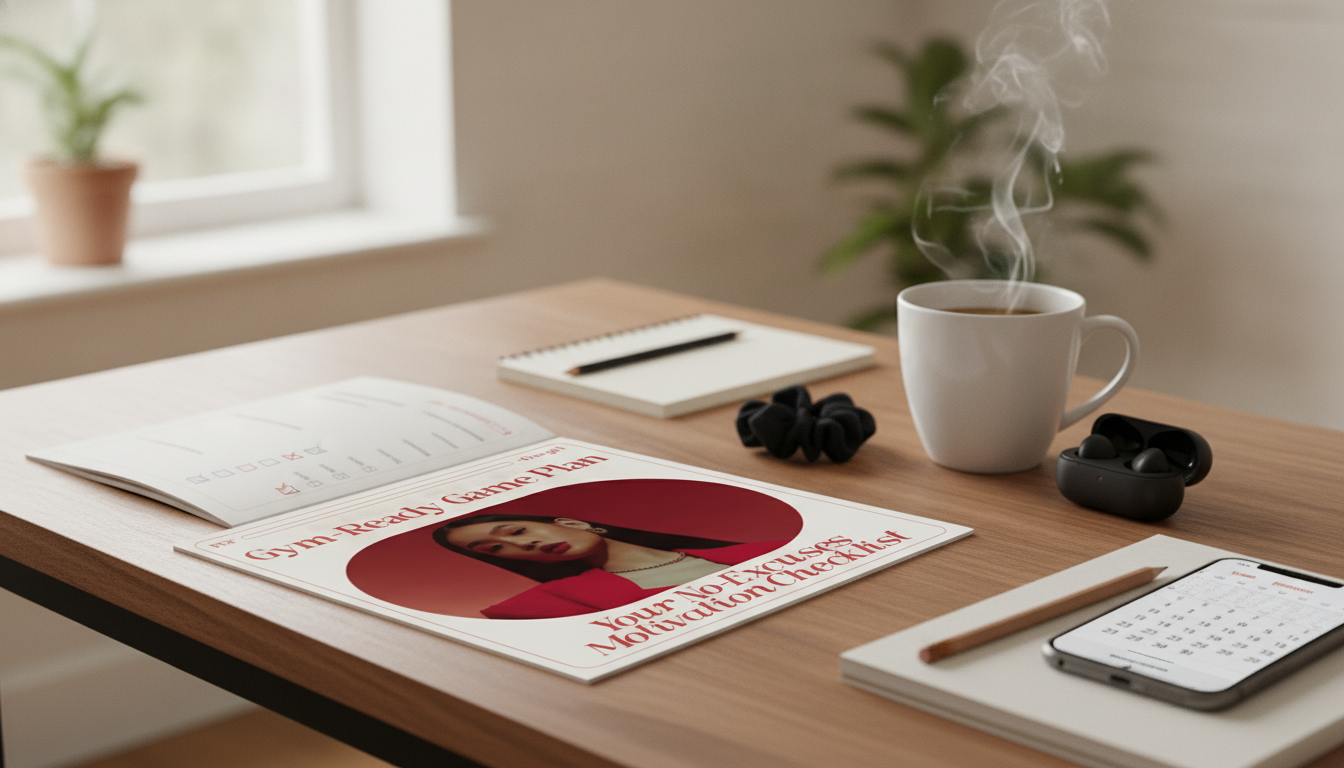
Gym-Ready Game Plan: A No-Excuses Checklist to Get to the Gym Even When Motivation Is Low
Motivation comes and goes; a repeatable plan is what gets workouts done. This game plan turns “I’ll start tomorrow” into a simple sequence: prep, prompt, show up, and finish. Use a printable checklist to reduce friction, handle common mental blocks, and build consistency without relying on willpower.
Why “gym motivation” fades (and what works instead)
Motivation is a feeling—useful when it shows up, unreliable when life gets busy. Routines, on the other hand, are a system: a set of small steps that still work on low-energy days. The goal isn’t to feel inspired; it’s to arrive and begin.
Consistency improves most when the first five minutes are easy and pre-decided. That’s why “just get through the warm-up” works so well: it lowers the barrier to entry. Each small win (showing up, finishing a warm-up, completing your first set) reinforces identity—“I’m a person who trains”—and reduces resistance next time.
For baseline guidance on how much activity supports health, see the CDC’s physical activity basics and the ACSM physical activity guidelines.
The no-excuses sequence: a 10-minute pre-gym ritual
This is the “no debate” flow. It’s designed to be simple enough to follow even when your brain is trying to negotiate.
- Step 1: Decide the session type before the day starts. Choose strength, cardio, mobility, or recovery—no last-minute scrolling for ideas.
- Step 2: Pack the bag the night before. Shoes, bottle, headphones, towel. If you forget one thing, it becomes a reason.
- Step 3: Choose a trigger. “After coffee,” “after work,” or “right after school drop-off.” A consistent cue beats a flexible plan.
- Step 4: Use a “just start” rule. Commit only to the warm-up. Decide to continue after 10 minutes.
- Step 5: Use one phrase to override debate. Keep it short: “I follow the plan.”
- Step 6: Make the exit easy. Keys by the door, outfit ready, gym playlist queued.
If you want a ready-to-print version you can keep on the fridge or inside your bag, use Gym-Ready Game Plan: Your No-Excuses Motivation Checklist (Printable).
The printable checklist: how to use it for real-life follow-through
A checklist works when it’s treated like a tool, not a motivational poster. Use it in three layers: daily, weekly, and “if-then.”
- Daily use: Check off pre-gym steps (bag packed, outfit set, trigger chosen, warm-up commitment).
- Weekly use: Pick 2–4 gym days and define the smallest acceptable workout for each day.
- If-then planning: Write one response for each predictable obstacle (late meeting, low sleep, bad mood).
- Score the day by actions completed: Attendance and follow-through matter more than intensity on tough days.
- Keep it visible: Fridge, desk, or inside the gym bag—out of sight is out of mind.
For extra support on reducing mental clutter (especially when stress makes everything feel harder), pairing your training habit with a simple mindfulness routine can help. Using AI to Track and Enhance Your Daily Meditation Practice is a structured way to reflect, track, and stay consistent without overthinking it.
Excuse-proofing: common blockers and the counter-move
Most skipped workouts aren’t caused by laziness—they’re caused by vague plans colliding with real life. Replace “get fit” with a next action: arrive, warm up, do three movements. Pre-commit to a minimum (15–20 minutes counts), and make the gym visit smaller than the excuse by shortening the session before skipping it entirely.
Excuse-proofing cheat sheet
| Common blocker | What it sounds like | Counter-move to stay on track |
|---|---|---|
| Low energy | “I’m too tired to work out.” | Go for 10 minutes; decide after the warm-up. Choose a low-stress session (mobility, incline walk, light full-body). |
| No time | “My day is packed.” | Do the minimum effective session (20–30 minutes) and stop on time. Schedule it like an appointment. |
| Low confidence | “I don’t know what to do.” | Follow a simple template: warm-up + 3 moves + cooldown. Repeat the same plan for 2–4 weeks. |
| All-or-nothing mindset | “If it’s not perfect, it’s pointless.” | Aim for “better than zero.” Track attendance and consistency first. |
| Feeling self-conscious | “People will judge me.” | Arrive with a written plan; use a quiet corner; wear comfortable clothes; focus on set-by-set execution. |
| Not seeing results fast | “This isn’t working.” | Measure inputs (sessions/week, steps, protein, sleep). Review progress every 4 weeks, not daily. |
A simple gym plan for the days you don’t want to go
To make the “pack tonight” step effortless, having a simple home organization system helps. A low-cost option for keeping workout clothes or spare towels in one place is the Large Capacity Non-Woven Clothes & Quilt Storage Bag Organizer.
Mindset shifts that make consistency automatic
For more on habit-building mechanics, the APA’s guidance on building healthy habits is a useful reference.
When motivation is a deeper issue: stress, sleep, and mental load
FAQ
How do you motivate yourself to go to the gym when you’re tired?
Use a 10-minute commitment: show up and complete the warm-up, then decide. Choose a low-stress session (mobility, light full-body, incline walk) so you keep consistency without crushing recovery.
What if I keep skipping workouts even with a plan?
Reduce the plan to the smallest version you can complete (time, intensity, complexity). Add a clear trigger time, pack the night before, and track attendance first, then review obstacles weekly and write one if-then response per obstacle.
Is a short workout worth it if I can’t do a full session?
Yes—short sessions protect the habit and still build fitness over time. A focused 20–30 minutes (warm-up plus a few key movements) is far better than skipping and restarting repeatedly.
















Leave a comment