Prada Trend Forecast Checklist for Buyers & Investors
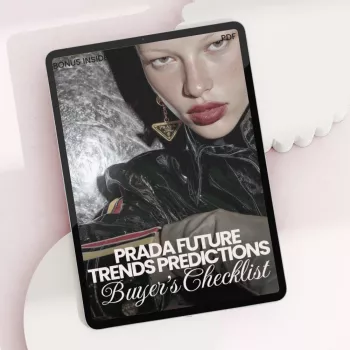
Prada Future Trends Predictions: Buyer’s Checklist for Fashion Investors and Boutique Owners
A reliable way to buy Prada with confidence is to separate runway noise from repeatable retail signals. This checklist-style digital download is built for fashion investors and boutique owners who need a fast, structured method to spot upcoming Prada direction, evaluate demand drivers, and translate predictions into an actionable buying plan—without over-ordering or missing the pieces that define the next cycle. For more guidance, see Is the digitalisation the future of the luxury industry?.
Who This Checklist Helps (and When to Use It)
The same Prada season can look completely different depending on whether you’re optimizing for margin, sell-through speed, or long-term value. A checklist approach keeps the focus on patterns that can be repeated and measured. For further reading, see Prada (@prada) • Instagram photos and videos.
- Fashion investors: Identify categories and storylines likely to sustain resale value and long-term brand momentum.
- Boutique owners and buyers: Plan seasonal buys, decide depth by category, and align merchandising with client demand.
- Stylists and curators: Anticipate silhouettes, materials, and accessories to build editorial and client pulls.
- Best timing: Use it 6–12 months ahead of key buying windows, and again immediately after major runway drops to validate signals.
What “Future Trends” Means for Prada Specifically
With Prada, “future trends” aren’t about guessing one viral item. They’re about tracking brand-coded signals that repeat across seasons and show up in scalable lines—signals that often outlast a single social moment.
- Brand-coded signals: Details that recur across seasons (silhouette logic, material choices, color discipline, hardware language) and tend to persist.
- Category rotation: Where the brand is placing emphasis (bags vs. outerwear vs. footwear) and how that affects boutique sell-through.
- Cultural alignment: Collaborations, media moments, and styling cues that amplify demand beyond runway performance.
- Commercial translation: Which elements are likely to appear in scalable product lines versus limited or show-only pieces.
For runway reference and season-to-season comparisons, a consistent archive helps; Vogue Runway’s Prada coverage is a useful baseline for tracking repeat cues over time.
How to Turn Predictions into Buying Decisions
Predictions only matter if they change what you order, how deep you buy, and how you present the story in-store. The goal is to build a buying plan that can flex when client behavior confirms (or rejects) a trend.
- Define the client and price band first: Map core clients to categories (entry accessories, hero bags, ready-to-wear) before chasing novelty.
- Use a three-tier bet structure: (1) core replenishable items, (2) seasonal winners, (3) controlled-risk statement pieces.
- Set triggers for increasing depth: Early waitlists, repeat inquiries, strong try-on conversion, and consistent social saves/shares.
- Protect margin with disciplined breadth: Buy fewer stories, deeper within the ones that match client behavior and the brand’s direction.
If you track category strength alongside macro signals (tourism, luxury demand, regional shifts), The Business of Fashion can provide broader context that helps explain why certain luxury categories accelerate or cool.
Buyer’s Checklist: Signals to Watch and What to Do Next
Use the checklist as a repeatable scan: identify what’s repeating, decide what you’ll back, then set tight controls on what you won’t. These signals keep teams aligned when opinions diverge after a runway drop.
Runway-to-Retail Action Grid
| Signal | What it can indicate | Buyer action | Risk control |
|---|---|---|---|
| Repeat silhouette across multiple looks | A durable seasonal direction | Buy depth in 1–2 wearable hero pieces | Limit variants; focus on best-selling sizes/colors |
| Hardware motif appears on bags + footwear | Cross-category story with higher visibility | Build a capsule across categories | Keep total buy tight; use pre-orders or client deposits where possible |
| Controlled palette with one accent color | Easy styling and higher outfit conversion | Merchandise as sets; create styling bundles | Avoid overbuying accent; keep it as a highlight |
| Material innovation highlighted in styling | Higher perceived value; editorial pickup | Train staff on feel, care, and differentiation | Stock fewer SKUs; prioritize proven fits |
| Limited distribution cues or buzz-driven drops | Short-term spikes and fast sell-outs | Use for customer acquisition and PR moments | Cap spending; pair with dependable core items |
Boutique Implementation: Merchandising, Staffing, and Clienteling
How the Digital Download Fits Into a Buying Workflow
For brand-level context on performance and strategy, Prada Group Investor Relations is a helpful reference point alongside boutique-level sales data.
Product Details and Quick Start
If you want a fast way to move from runway observation to a disciplined order plan, start here: Prada Future Trends Predictions: Buyer’s Checklist (Digital Download). It’s built for quick scanning, so you can make decisions under time pressure and still keep your logic consistent.
Two practical add-ons that support day-to-day execution: Large Capacity Non-Woven Clothes & Quilt Storage Bag Organizer for backroom organization during deliveries and transfers, and Using AI to Track and Enhance Your Daily Meditation Practice (Digital Download) for buyers who want a lightweight routine to stay consistent during high-volume market weeks.
FAQ
Is this checklist useful if buying Prada on the secondary market rather than through wholesale?
Yes. The same signals help you prioritize categories and design codes that tend to keep demand, and the action grid can be used to set budget caps, target entry points, and clear exit rules if momentum fades.
How often should the checklist be updated during a season?
Update it at four moments: right after runway, before placing buys, after early delivery feedback, and at mid-season when sell-through data is clear. Iteration based on real client behavior is what makes the checklist more accurate each cycle.
Will this help reduce overbuying while still catching high-demand pieces?
Yes. The tiered bet structure keeps most dollars in replenishable and proven categories, while triggers like waitlists, repeat inquiries, and try-on conversion dictate when to increase depth—so you scale only after demand is verified.















Leave a comment