Calm Modern Modular Wardrobe Storage for Minimal Bedrooms
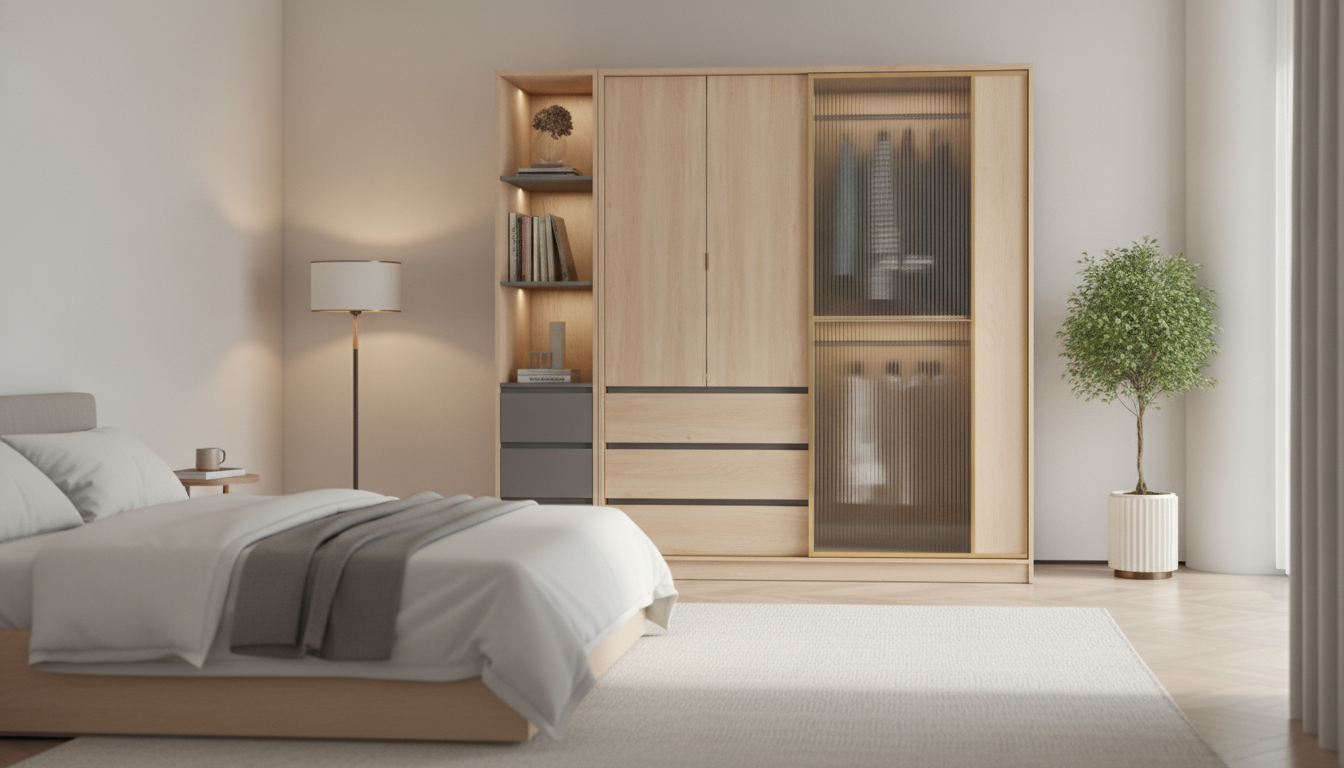
Modern Minimalist Wardrobe Storage That Looks Calm (and Works Hard)
A clean-lined wardrobe can make a room feel calmer while still handling real-life storage demands. The Modern Minimalist Wardrobe: Spacious, Modular, and Stylish Storage Solution is designed to keep clothing, accessories, and everyday essentials organized with a modular layout that supports both small and large spaces—without sacrificing a streamlined look.
Minimal doesn’t have to mean “less storage.” It can mean fewer visual interruptions, smarter zones, and a layout that reduces clutter across the entire bedroom.
What Makes a Wardrobe Feel Modern and Minimal
Modern minimalist wardrobes share a few design cues that instantly read as intentional. First, the geometry is simple: long, clean lines, smooth surfaces, and a profile that doesn’t visually “busy up” the room. Even when the interior is packed with daily essentials, the exterior stays consistent and calm.
A truly minimalist storage piece also hides real-life mess: folded tees, gym bags, laundry baskets, and everyday accessories disappear behind a unified facade. This keeps the room feeling settled, even when schedules aren’t.
Proportion matters as much as finish. Balanced height and width help a wardrobe sit comfortably in contemporary bedrooms, apartments, and dressing areas, especially where floor space is precious. A neutral presence also plays well with mixed materials—warm wood tones, stone textures, and matte metal accents—so the wardrobe can anchor the room without stealing attention.
Spacious Storage That Stays Organized
Spacious wardrobes feel better to use because the layout supports how people actually dress. A roomy interior handles everyday rotation pieces (tees, knits, denim) alongside bulkier seasonal items, without turning shelves into unstable towers.
Modular zones make it easier to separate categories—workwear, casual, outerwear, and accessories—so clothing doesn’t migrate into one chaotic pile. Vertical storage also improves visibility: fewer overstuffed stacks means fewer forgotten items at the back of a shelf.
When storage is planned well, the bedroom can often lose extra dressers, plastic bins, and overflow racks. The room feels bigger because the “extras” aren’t needed.
Practical Storage Zones and What They Hold
| Storage zone | Best for | Organization tip |
|---|---|---|
| Hanging section | Coats, dresses, shirts, suits | Group by type and color to speed up mornings |
| Shelving | Folded tops, knitwear, denim, bags | Use shelf dividers to prevent leaning piles |
| Lower space | Shoes, storage boxes, folded linens | Label boxes for seasonal swaps |
| Accessory area | Belts, hats, small handbags | Keep small items in trays or organizers |
Modular Design for Flexible Layouts
Modular wardrobes are built for change. The biggest advantage is long-term flexibility: storage can expand as a wardrobe grows, or reconfigure after a move to a new room layout. This is especially helpful in apartments where the “right” wall today may not be the right wall next year.
Modularity also supports different room shapes, including narrow walls and open-plan bedrooms where storage needs to look polished from multiple angles. A zone approach makes the setup feel tailored: daily essentials at eye level, special-occasion pieces higher up, and heavier items lower to keep the footprint stable.
For shared bedrooms, modular sections reduce overlap. Two people can have clear, separate areas—less mixing, less digging, and fewer morning bottlenecks.
Styling the Wardrobe to Match a Minimalist Room
To keep the room feeling quiet and cohesive, pair the wardrobe with soft, solid-color textiles and a restrained palette. The goal isn’t to make everything match perfectly—it’s to keep the visual rhythm consistent so the wardrobe reads as a clean architectural element.
Room Planning Tips Before Ordering
Before committing to a wardrobe, measure wall width, ceiling height, and available depth, and note obstacles like baseboards, outlets, and vents. If you’re converting measurements from metric to U.S. units (or the reverse), a reliable reference like the National Institute of Standards and Technology (NIST) conversion guidance can help keep sizing precise.
Finally, map what must fit: long-hang items, folded stacks, shoes, and occasional storage like luggage or spare linens. General furniture-buying guidance (materials, construction, and fit for your space) can also be found through Consumer Reports.
Care and Upkeep for a Clean, Long-Lasting Look
Complete the Bedroom Storage and Style
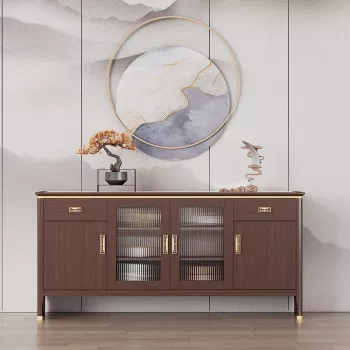
A wardrobe often becomes the “base layer” of bedroom storage, but a few complementary pieces can make the entire space function better. A sideboard can add hidden storage for linens and personal items outside the closet zone—especially useful if the bedroom doubles as a work-from-home space. Consider the Rustic Wood Sideboard for a warmer, grounded contrast to modern minimal lines.
If there’s a sitting corner or open area at the foot of the bed, a statement table can elevate the room while keeping the material palette refined. The Luxury Marble Round Coffee Table with Gold Stainless Steel Base adds a polished focal point that pairs well with neutral wardrobes and soft textiles.
Lighting ties everything together. Warm, diffused illumination softens clean edges and improves dressing-area visibility. The Southeast Asian-Inspired Bamboo and Rattan Pendant Chandelier brings texture overhead, balancing a minimalist layout with natural material character.
FAQ
How much space is needed in front of a wardrobe for comfortable use?
Leave enough clearance to fully open doors and drawers and still step back to view outfits comfortably. Also account for nearby bed placement and walkways so the wardrobe doesn’t create a pinch point in the room.
What does “modular” mean for a wardrobe setup?
Modular means the wardrobe is made of components or sections that can be arranged to suit your room and storage needs. This flexibility makes it easier to reconfigure later if you move, redecorate, or need more storage.
How can a minimalist wardrobe stay organized long term?
Use clear zones by category, stick with consistent hangers and matching bins, and do a quick seasonal reset to rotate clothing and remove rarely worn items. Avoid overfilling shelves and rods so everything stays visible and easy to put back.










Leave a comment