Solid Wood Cat Scratching Post with Sisal Ball for Play
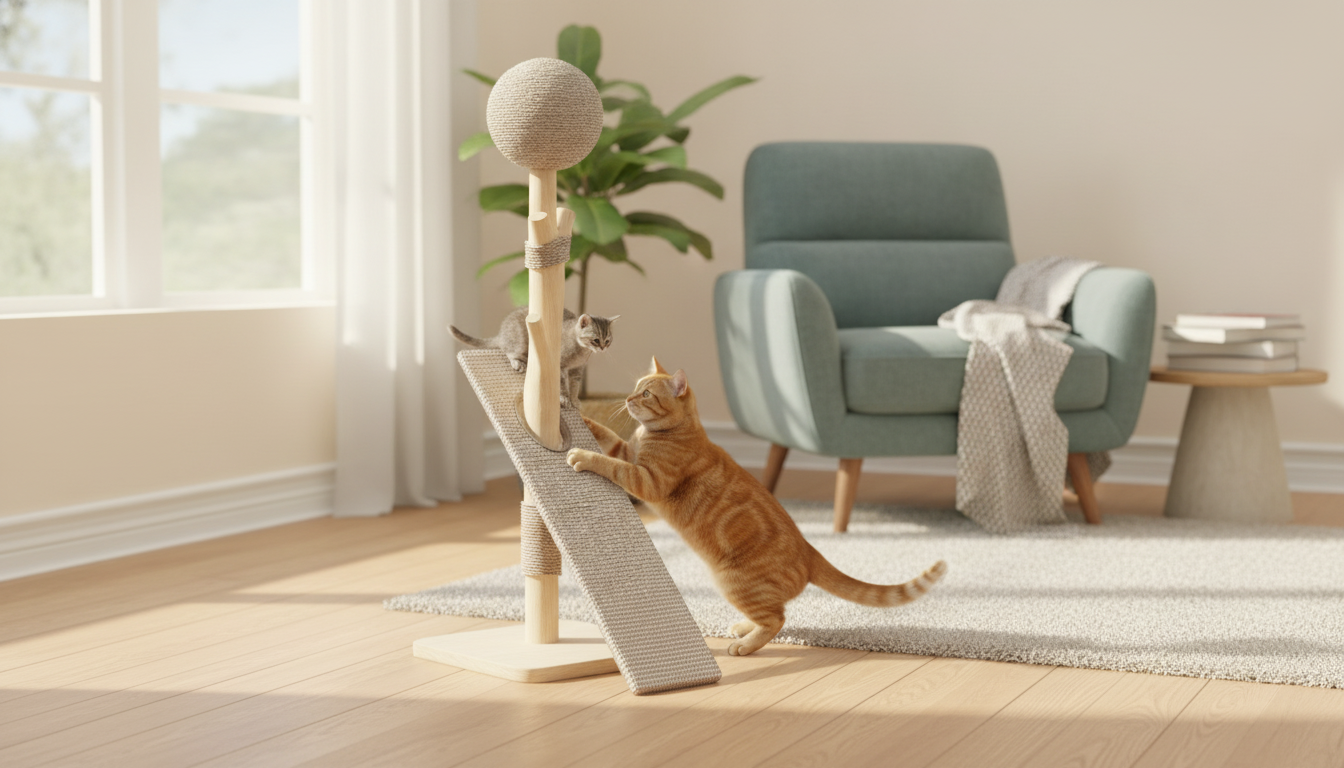
Solid Wood Cat Scratching Post with Sisal Ball: Stable Scratching, Built-In Play
A sturdy scratcher can protect furniture, support healthy claw care, and give cats a reliable place to stretch and play. A solid wood scratching post with a sisal ball is designed to combine stability with enrichment in a compact footprint—making it a practical everyday station for single-cat and multi-cat homes alike.
Cats tend to commit to scratching when the post feels secure under their weight, offers a satisfying texture, and sits where scratching already happens. With the right setup, a dedicated post can quickly become the “default” spot for claw maintenance and quick bursts of play.
Why Cats Need a Dedicated Scratching Spot
Scratching isn’t a “bad habit” to eliminate—it’s a normal, healthy behavior that needs a better outlet than your couch.
- Scratching helps remove old claw sheaths and keeps claws functional.
- It supports full-body stretching, especially through the shoulders and back.
- Scratching is also a way cats mark territory visually and with scent from paw glands.
- A consistent, appealing scratcher can reduce scratching on sofas, rugs, and door frames.
For deeper background on why cats scratch and how to guide the behavior, see the ASPCA’s overview of scratching behavior.
What Makes Solid Wood and Sisal a Practical Combo
Material choices influence whether a cat uses a scratcher daily or ignores it. Solid wood and sisal are a common pairing because they address the two biggest adoption factors: stability and texture.
- Solid wood bases tend to resist tipping and wobble, which can discourage use in lighter scratchers.
- Sisal is a common scratching surface because it offers satisfying resistance and texture.
- The firmer the structure, the more confidently a cat can dig in and stretch to full length.
- A sisal ball adds movement and novelty, encouraging quick play sessions between scratches.
International Cat Care also highlights how providing suitable scratching surfaces supports feline wellbeing and helps prevent household damage: Understanding scratching.
Key Features to Look For Before Buying
Not all posts are equally “cat convincing.” Use these practical checkpoints to compare options and choose a post your cat is likely to adopt.
- Stability: a wide, heavy base reduces sliding and increases confidence for larger cats.
- Post height: taller posts support vertical stretching; shorter ones may still work for kittens or horizontal scratchers.
- Sisal coverage: more wrap area typically means longer usable life before the most-used section frays.
- Safe build: smooth edges, non-toxic finishes, and tightly secured parts (especially any hanging or rolling ball).
- Placement fit: choose a footprint that can sit near a favorite lounging zone without blocking walkways.
Quick checklist for choosing a scratching post
| Feature | What to check | Why it matters |
|---|---|---|
| Base | Wide and weighty; non-slip feet if possible | Prevents tipping and helps cats commit to scratching |
| Height | Tall enough for a full stretch for the cat’s size | Encourages regular use and reduces furniture scratching |
| Sisal wrap | Tight wrap with minimal gaps; thick rope | Improves durability and scratch satisfaction |
| Play element | Ball is firmly attached and cannot be swallowed | Adds enrichment without introducing hazards |
| Finish | Smooth, sealed wood; no strong chemical odor | Comfort and safety for paws and nose |
How to Set It Up for Fast Adoption
Placement and first-week routines matter as much as the post itself. If your cat already has a favorite “corner,” that’s valuable information—use it.
- Place the post near where the cat already scratches (often next to a couch corner) for the first 1–2 weeks.
- Add positive cues: sprinkle catnip on the sisal (if the cat responds to it) or use a feline pheromone spray on the base area.
- Reward use immediately with a small treat or praise; avoid punishment for “wrong place” scratching—redirect instead.
- If multiple cats share a home, add more scratching stations to reduce competition and guarding.
If you’re dealing with persistent furniture scratching, the Humane Society offers a step-by-step approach to redirection and environmental setup: How to stop unwanted scratching.
Care, Cleaning, and Extending the Life of the Sisal
Sisal is durable, but any scratch surface wears faster when cats use it the way they’re supposed to. A little upkeep keeps the area cleaner and helps the post last longer.
Matching the Post to Different Cat Personalities
Product Spotlight: Solid Wood Cat Scratching Post with Sisal Ball
The Solid Wood Cat Scratching Post with Sisal Ball is built for cats who like a firm, stable surface they can really lean into. The solid wood base helps reduce wobble during full-body stretches, while the sisal wrap provides the grippy texture many cats prefer.
Home-friendly picks to pair with a scratcher
FAQ
Is sisal safe for cats to scratch?
Yes—sisal is widely used on cat scratchers because it’s durable and provides satisfying resistance. Monitor for loose fibers that could be swallowed, and replace the scratcher if the wrap becomes excessively frayed.
Where should a scratching post be placed for the best results?
Start by placing it near current scratching hotspots (like a couch corner) and near sleeping areas where cats often stretch and scratch after waking. In multi-cat homes, using multiple stations in convenient, visible locations can reduce competition.
How tall should a scratching post be?
Choose a post tall enough for your cat to fully stretch with front paws extended and body lengthened. Taller posts are typically better for adult cats, while kittens can start with shorter options as long as they’re stable.













Leave a comment