Kitchen Island Cart with Storage: Prep Space on Wheels
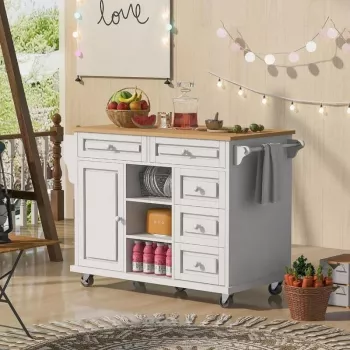
Multi-Purpose Kitchen Island Cart with Ample Storage
A kitchen cart that adds prep space and keeps essentials organized can change how a kitchen functions day to day. This multi-purpose island cart is designed to hold frequently used items within reach, support meal prep, and roll where it’s needed—whether that’s beside the stove, near the dining area, or as a serving station for guests.
If you’re shopping for a flexible upgrade, start with the Multi-Purpose Kitchen Island Cart with Ample Storage—a practical way to gain storage and a dedicated work surface without committing to a full remodel.
What This Kitchen Island Cart Adds to Daily Cooking
- Creates an extra work surface for chopping, plating, and small-appliance use when counter space is limited.
- Keeps pantry staples, cookware, and linens organized so the main counters stay clearer.
- Supports flexible routines: prep station on weekdays, serving cart for gatherings, and a coffee or snack bar when entertaining.
- Helps define zones in open layouts (prep, beverage, baking, or kid-friendly snack access).
A cart works best when it takes pressure off the busiest areas of the kitchen. Instead of shuffling items between counters, sink, and table, you can keep your “most used” tools close to the action and roll the cart where the workflow needs it.
Storage That Stays Practical (Not Just Spacious)
- Group storage by task: cooking tools near the cooktop, baking supplies together, and serving items closer to the dining area.
- Use the most accessible spots for daily-use items and reserve deeper areas for backups and bulk goods.
- Add simple organizers (bins, shelf risers, labeled jars) so capacity doesn’t turn into clutter.
- Plan for tall items such as oil bottles, cutting boards, or small appliances so they store without wasted vertical space.
Quick guide to evaluating a storage-forward kitchen cart
| Feature | Why it matters | What to look for |
|---|---|---|
| Multiple storage zones | Separates prep tools from pantry items for faster cooking | A mix of concealed and open space for both neat storage and quick access |
| Room for small appliances | Reduces countertop crowding | Space that accommodates common footprints (mixer, air fryer, blender) plus cord management |
| Easy-to-clean surfaces | Spills are inevitable around prep areas | Smooth, wipeable top and interior areas that don’t trap crumbs |
| Stable, usable worktop | A cart should feel like a real workstation | A top that can handle kneading, slicing, and serving without wobble |
| Efficient footprint | Extra storage shouldn’t block traffic | Sizing that preserves walkways and allows drawers/doors to open comfortably |
Mobility, Parking, and Stability in Real Kitchens
- Casters make it easier to clean around the cart and reposition it for hosting or batch cooking.
- Locking wheels help the cart stay planted during chopping, mixing, or pulling items from storage.
- Consider where it will “park” most of the time (near an outlet for appliances, or near the sink for prep cleanup).
- Test the route: ensure it can roll past tight corners, rugs, and transitions between flooring types.
In day-to-day use, the ideal cart behaves like two pieces of furniture: a workstation when locked, and a helper when unlocked. A quick “parking plan” also prevents the cart from drifting into walkways—choose a spot that won’t interfere with refrigerator swings, oven doors, or the main cooking lane.
Ways to Use It Beyond Meal Prep
For entertaining, pairing your cart with storage-forward dining furniture can tighten up the whole room. A Rustic Wood Sideboard can hold platters, glassware, and linens while the cart handles last-minute refills and serving utensils. For a warmer hosting vibe, the Southeast Asian-Inspired Bamboo and Rattan Pendant Chandelier can visually anchor the serving zone and make the kitchen feel more finished.
Sizing and Placement Tips for Comfortable Flow
Good placement is less about symmetry and more about habits. If most prep happens at the sink, keep the cart close enough to become the “landing pad” for rinsed produce and mixing bowls. If it’s primarily a beverage bar, place it near the dining area so traffic doesn’t cut through the cooking zone. For additional planning guidance on clearances and functional layout, reference the National Kitchen & Bath Association (NKBA) Kitchen Planning Guidelines.
Care, Cleaning, and Food-Safe Habits
For food-prep surfaces, a simple routine goes a long way: clean visible debris, wash with hot soapy water, rinse, then sanitize when needed—especially after raw proteins. The USDA Food Safety and Inspection Service Kitchen Companion is a reliable reference for kitchen hygiene basics like clean, separate, cook, and chill.
What to Set Up on Day One (A Simple Organization Plan)
FAQ
Do locking wheels make a difference on a kitchen cart?
Yes—locking casters keep the cart from drifting on smooth flooring and make it feel more like a fixed island when parked. This added stability is especially helpful during chopping, mixing, or pulling heavier items from storage.
What should be stored on a kitchen island cart to keep it from getting cluttered?
Zone items by task (prep, baking, beverage, serving) and keep the top mostly clear for real working space. Use bins or labels for smaller items, and rotate seasonal or rarely used pieces into secondary storage to protect the cart’s “prime” spots.
How should a food-prep cart surface be cleaned after handling raw meat or poultry?
Clean the surface promptly to avoid cross-contamination: remove debris, wash with hot soapy water, rinse, and sanitize as appropriate. Using separate cutting boards for raw proteins also helps keep the cart’s main surface cleaner and safer.














Leave a comment